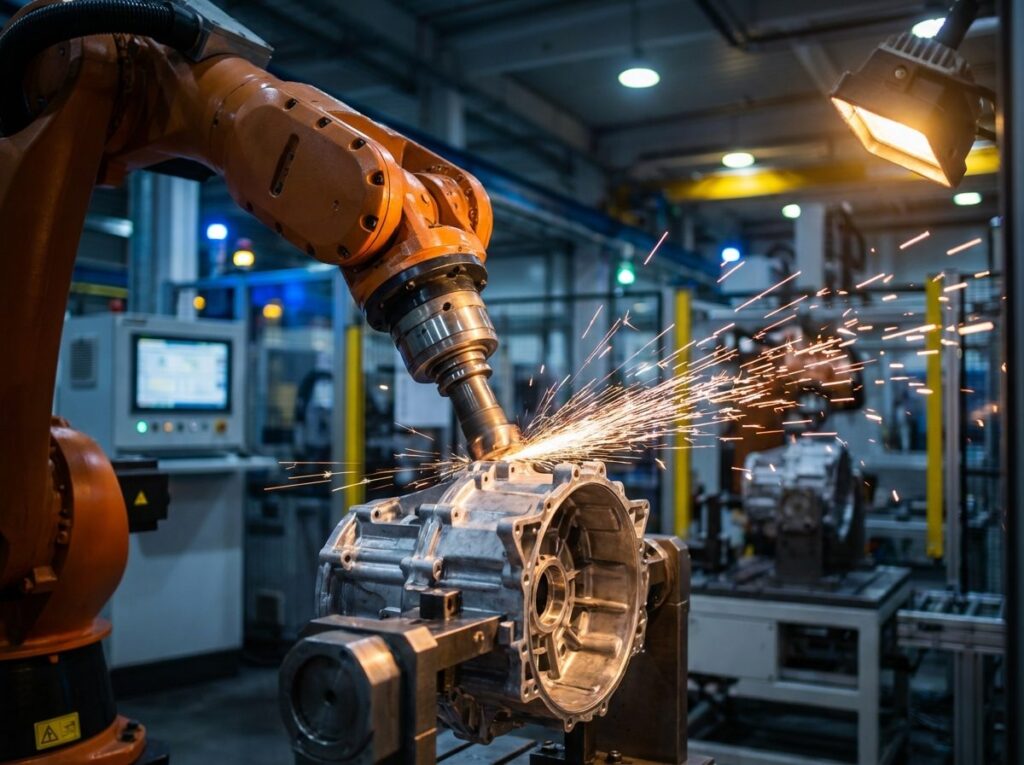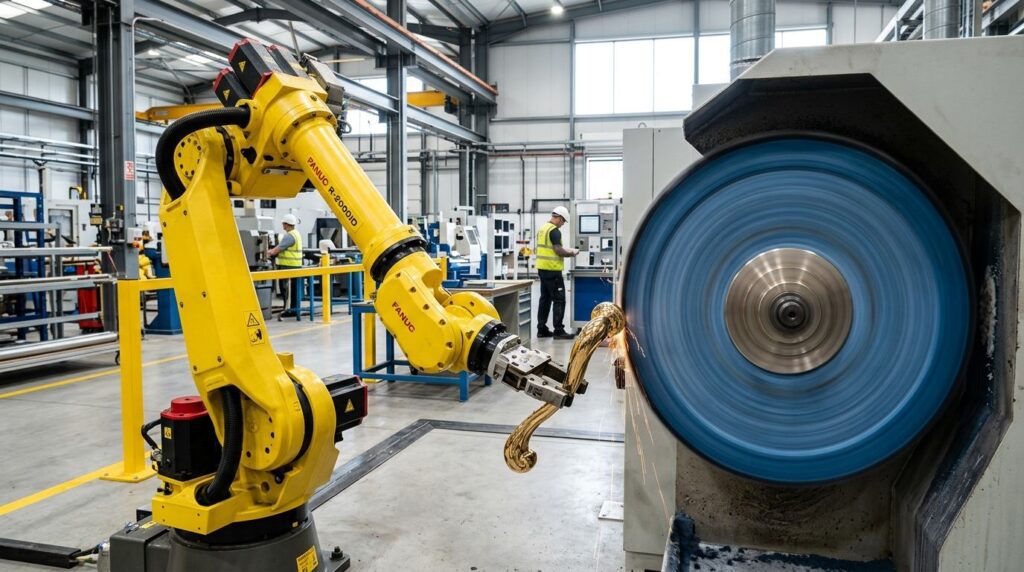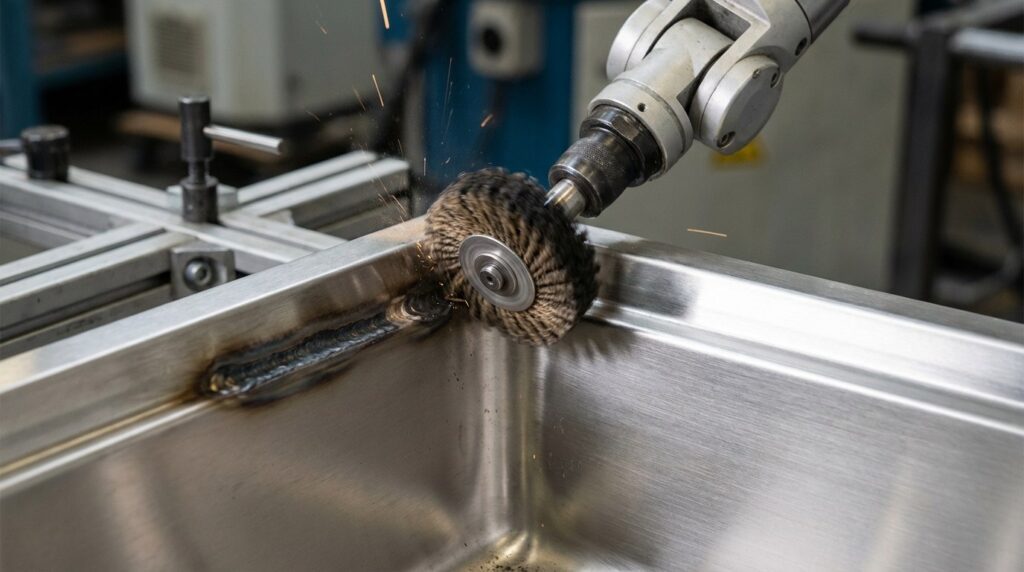
In high-end modern kitchen and commercial laboratory design, stainless steel sinks featuring an extreme high-gloss or mirror finish are the ultimate symbol of premium quality. However, blending weld marks on thin-walled metal into a flawless, mirror-like unibody look is an intensely challenging process in हार्डवेयर और सैनिटरी निर्माण. This article deeply analyzes the surface polishing pain points of handmade stainless sinks and demonstrates how a robotic polishing system with active force control removes manual over-cutting, thermal distortion and unpolished dead zones from the equation. Discover how to achieve stable delivery of seamless, mirror-quality premium sinks.
प्रीमियम स्टेनलेस स्टील सिंक क्या है?
हम विशेष रूप से प्रीमियम हस्तनिर्मित स्टेनलेस स्टील सिंकों की बात कर रहे हैं। ये आमतौर पर उच्च-गुणवत्ता वाली SUS304 या SUS316 स्टेनलेस स्टील शीट्स से बने होते हैं, जिन्हें लेजर-कट किया जाता है, मोड़ा जाता है, और फिर सीमों पर मैनुअल TIG वेल्डिंग या लेजर वेल्डिंग द्वारा असेंबल किया जाता है।.
उच्च-चमक सिंक अनुप्रयोग परिदृश्य
सामान्य ब्रश्ड/सैटिन फिनिशों से परे, कई उच्च-स्तरीय अनुप्रयोग—जैसे लक्ज़री होटल सुइट्स, चिकित्सा सुविधाओं में निर्जंतुकीकृत वॉशिंग स्टेशन, और व्यावसायिक बार काउंटरटॉप्स—का भारी झुकाव हाई-ग्लॉस या मिरर-पॉलिश किए हुए सिंक.
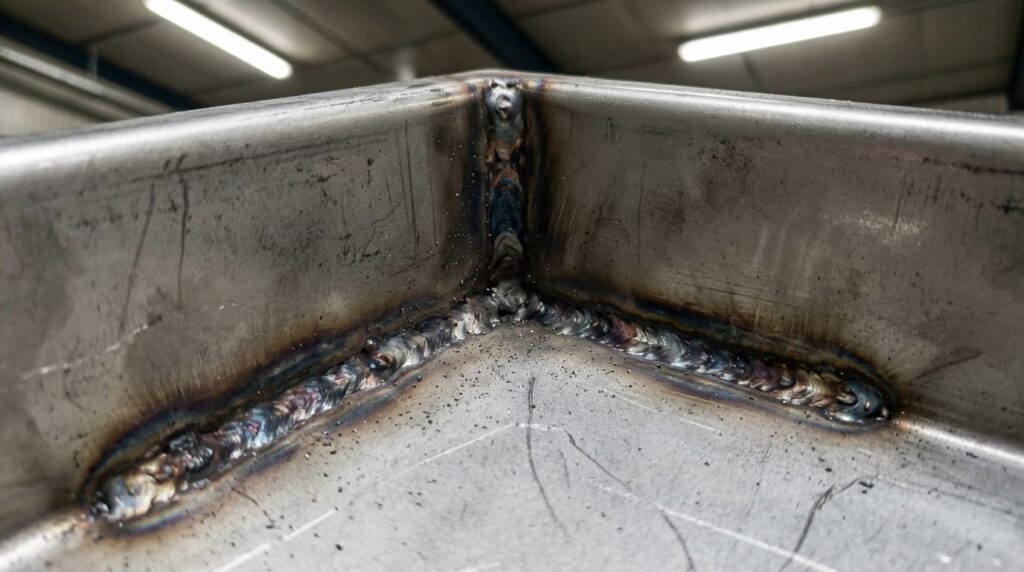
एक उच्च-चमक वाली पालिश न केवल शानदार भव्यता का अनुभव कराती है, बल्कि एक महत्वपूर्ण कार्यात्मक उद्देश्य भी पूरा करती है: एक पूरी तरह से चिकनी दर्पण जैसी सतह में सूक्ष्म छिद्र नहीं होते, जो बैक्टीरिया के विकास को काफी हद तक रोकता है और इसे साफ करना बेहद आसान बनाता है। इसके लिए आवश्यक है कि सिंक के वेल्डेड कोनों को अच्छी तरह से घिसकर समतल पॉलिश किया जाए, जिससे “सीमलेस, यूनिबॉडी निर्माण” का दृश्य भ्रम पैदा हो।”
स्टेनलेस स्टील सिंक की संरचनात्मक विशेषताएँ
इन सिंकों को पॉलिश करना भौतिक और प्रक्रियात्मक रूप से अत्यधिक चुनौतियाँ प्रस्तुत करता है:
- उच्च-प्रतिबिंबित सतहों का “मैग्निफाइंग ग्लास” प्रभावएक पॉलिश की हुई सतह दर्पण की तरह काम करती है। माइक्रोन स्तर का अवसाद (अति-घिसाई के कारण) या थोड़ी सी लहरदारता परावर्तित प्रकाश में अनंत रूप से बढ़ जाएगी, जिससे उत्पाद तुरंत अस्वीकृत हो जाएगा।.
- संकीर्ण और गहरे आंतरिक कोणीय वेल्डचार ऊर्ध्वाधर वेल्डेड कोनों में बहुत कम जगह होती है। मानक बफिंग पहिये प्रवेश नहीं कर सकते, जिससे काली ऑक्सीकरण परत हटाने का प्रयास करते समय मूल धातु में गड्ढा बनाना बेहद आसान हो जाता है।.
- पतली-दीवार वाली सामग्रियाँ ऊष्मीय विकृति के प्रति अत्यधिक संवेदनशीलशीट की मोटाई आमतौर पर 1.2 मिमी – 1.5 मिमी होती है। सिसल या कॉटन व्हील्स के साथ उच्च-गति बफिंग से अत्यधिक घर्षण ऊष्मा उत्पन्न होती है। यदि दबाव बहुत अधिक हो या रहने का समय बहुत लंबा हो, तो स्टील प्लेट जल जाएगी (पीली हो जाएगी) या स्थानीय रूप से गंभीर रूप से विकृत और मुड़ जाएगी।.
प्रीमियम सिंक पॉलिशिंग की प्रमुख विशेषताएँ
मुख्य विशेषताएँ:
- निर्बाध दृश्य मिश्रणकई पॉलिशिंग चरणों के बाद, वेल्डेड कोनों को मूल धातु के साथ पूरी तरह से मिल जाना चाहिए, जिससे वेल्ड और आसपास की प्लेट के बीच कोई सीमा रेखा दिखाई न दे।.
- उच्च चमक / दर्पण जैसी चमकसतह को खरोंचों और फीके धब्बों से मुक्त होना चाहिए, जिससे Ra < 0.05 μm के साथ अत्यधिक परावर्तक, पूर्ण दर्पण प्रभाव प्राप्त हो।.
- बिना विकृति के पूर्ण समतलतायह बड़ी, पतली धातु की चादर की भौतिक समतलता बनाए रखने के लिए कुशलतापूर्वक तापमान और दबाव नियंत्रण पर निर्भर करता है।.
सिंक पॉलिशिंग के लिए तकनीकी मापदंड
| आइटम | पैरामीटर सीमा | टिप्पणियाँ |
| वेल्ड बीड की मोटी ग्राइंडिंग | P80 – P120 सिरेमिक/फ्ल्याप डिस्क | उभरती वेल्ड बीड्स का त्वरित निष्कासन |
| सिसल बफिंग (तैयारी) | १५०० – २५०० आरपीएम | पिसने के निशान हटाने के लिए कटिंग कंपाउंड के साथ उपयोग करें। |
| कपड़े से पॉलिश करना (दर्पण) | 2000 – 3000 आरपीएम | चमकदार प्रतिबिंबों के लिए उच्च-चमक मोम के साथ उपयोग करें |
| संपर्क बल नियंत्रण | 15N – 30N (उच्च-आवृत्ति गतिशील) | पूरी तरह से अत्यधिक कटाई और तापीय विकृति को रोकता है। |
| उत्पादन चक्र समय | 4 – 6 मिनट / सिंक | आकार और विशिष्ट पॉलिश ग्रेड पर निर्भर करता है। |
प्रीमियम सिंक्स के लिए रोबोटिक पॉलिशिंग को क्यों प्राथमिकता दी जाती है?
पारंपरिक मैनुअल पॉलिशिंग की समस्याएँ
यदि एक सिंक फैक्ट्री उच्च-चमक वाले फिनिश प्राप्त करने के लिए हाथ से पकड़े जाने वाले एंगल ग्राइंडर और पॉलिशर का उपयोग करने वाले श्रमिकों पर निर्भर करती है, तो उन्हें अतिक्रमणीय गुणवत्ता और क्षमता की बाधाओं का सामना करना पड़ता है:
| समस्या बिंदु | विशिष्ट मुद्दा | प्रभाव |
| उच्च “ओवर-कट और स्कोर्च” स्क्रैप | गति बढ़ाने के लिए, कर्मचारी ज़ोर से दबाव डालते हैं, जिससे पतली स्टील तेज़ी से गर्म हो जाती है, विकृत हो जाती है और पीली पड़ जाती है।. | एक बार जब मिरर सिंक में लहरदार गड्ढा या जलने का निशान हो जाता है, तो इसे ठीक करना लगभग असंभव हो जाता है और इसे कबाड़ में डाल दिया जाता है।. |
| कोनों में छोड़ी गई काली ऑक्सीकरण | आंतरिक 90-डिग्री कोनों में मैनुअल बल और कोण को नियंत्रित करना कठिन होता है, जिससे अक्सर वेल्ड में अपॉलिश ऑक्सीकरण रह जाता है।. | प्रीमियम लुक को नष्ट कर देता है; अवशिष्ट ऑक्सीकरण परतें जंग लगने के प्रति अत्यधिक संवेदनशील होती हैं।. |
| गुरुओं पर अत्यधिक निर्भरता | दर्पण पॉलिशिंग पूरी तरह से एक दशक के अनुभव वाले मास्टर की “महसूस” और “आँखों” पर निर्भर करती है।. | गंभीर प्रतिभा की कमी; एक मास्टर के जाने से उच्च-स्तरीय उत्पादन लाइन ठप हो सकती है।. |
रोबोटिक ऑटोमेशन के लाभ
एक का परिचय robotic automated polishing system equipped with active force control is the ultimate answer for sink manufacturers looking to upgrade their products and leapfrog their production capacity:
| तुलना आयाम | मैनुअल पॉलिशिंग | रोबोटिक पॉलिशिंग | सुधार |
| Surface Flatness | Prone to craters and waves | Constant force floating, flat and repeatable | Zero visual flaws under high-reflection light |
| Temp Control | Easily scorches/discolors | Even feed rates, no localized heat buildup | Burnt scrap largely eliminated |
| Capacity & Cycle | Slow, workers fatigue easily | 24/7 stable high-speed cutting & coloring | Capacity headroom for large orders |
| Dead Zone Finishing | Prone to dark spots | Agile posture, finely polishes every inch | Full-coverage blend lifts product grade |
मुख्य लाभ:
- High-Frequency Active Compliant Force Control: This is what makes a flawless high-gloss polish achievable at all. When the robotic polishing wheel contacts the thin sink wall, it acts like independent car suspension, fine-tuning the Z-axis at lightning-fast frequencies. No matter how much the steel plate rebounds, the system maintains an extremely light (e.g., 15N) and absolutely constant pressure. This ensures polishing stays strictly at the micron level on the surface, never “gouging” or “burning through.”
- Multi-Station Collaboration & Automatic Tool Changer (ATC): High-gloss polishing is a superposition of multiple processes. The robot can automatically drop the rough grinding head, pick up a sisal wheel for the corners, and finally switch to a massive pure cotton wheel for overall coloring. This not only changes tools swiftly but coordinates with the auto liquid compound system to ensure uniform abrasive distribution.
स्वचालित पॉलिशिंग प्रक्रिया कार्यप्रवाह
Turning a dark welded blank into a seamless mirror takes eight steps in the cell. Polishing is an intricate process of subtraction.

Stainless Steel Sink Complete Polishing Process Flow
| प्रक्रिया | प्रक्रिया का नाम | उपकरण | उपभोज्य | समय | सटीकता / उद्देश्य |
| 01 | Non-Destructive Load | Flexible Vacuum Suction Jig | – | पंद्रहों | Firmly grips, eliminating resonant noise |
| 02 | Weld Bead Rough Grind | रोबोट + उच्च-गति स्पिंडल | Small Dia. Flap Disc | साठ का दशक | Mills down protruding TIG beads in the 4 corners |
| 03 | Localized Sisal Prep | Robot + Small Buffing Spindle | Mounted Sisal + Cutting Wax | सत्तर के दशक के | Removes grind marks, treats discolored corner welds |
| 04 | Global Sisal Flattening | Robot + Heavy Pedestal Buffer | Large Sisal Wheel + Cut Wax | नब्बे का दशक | Initial coloring and flattening of bottom and walls |
| 05 | Cloth Mirror Polish | Robot + Heavy Pedestal Buffer | Soft Cotton Wheel + Gloss Wax | एक सौ बीस के दशक | Large-area high-speed polish for ultimate reflection |
| 06 | Ultrasonic Dewaxing | Auto Ultrasonic Wash Tank | Medical-Grade Dewaxer | 180s | Dissolves stubborn wax from pores and surface |
| 07 | DI Water Spray Rinse | High-Pressure Wash Cabin | आयनीकृत (डीआई) जल | चालीस के दशक | Washes away solvents, ensuring surface purity |
| 08 | High-Light Mirror Insp. | Zebra Stripe Inspection Light | – | तीस के दशक | Checks for micro-craters or unpolished dark areas |
Stainless Steel Sink Polishing Process Descriptions
चरण 1: गैर-विनाशकारी लोडिंग
उद्देश्य: Stably clamp the thin sheet metal sink.
मुख्य बिंदु: Mechanical hard clamping must NEVER be used. A profiled array of high-density vacuum suction cups grips the sink from the outside bottom and sides. This leaves no marks on the cosmetic face and massively absorbs polishing vibrations, preventing the thin plate from generating resonant “water ripple” chatter marks.
Step 2: Weld Bead Rough Grind
उद्देश्य: Completely mill down the hardest weld seams in the corners.
मुख्य बिंदु: Space is tight. The robot uses the ATC to swap to a small grinding head, executing high-RPM point-milling to carefully cut away the protruding weld bead without damaging the surrounding parent metal.
Step 3 & 4: Localized and Global Sisal Buffing (Prep)
उद्देश्य: Eliminate rough scratch marks and seamlessly blend the welded areas with the rest of the plate.
मुख्य बिंदु: Paired with an auto-spray system applying liquid cutting compound. The robot’s force control system plays a massive role here, sweeping rapidly with uniform thrust (to prevent heat buildup), causing the dark weld to gradually reveal a uniform metallic color, achieving a “seamless visual effect.”
Step 5: Cloth Mirror Buffing
उद्देश्य: The “coloring” stage that gives the product its soul.
मुख्य बिंदु: Utilizes extremely soft cotton cloth wheels and high-gloss compounds. The robot strictly controls contact force and dwell time. The cloth wheel executes complex, intersecting cross-hatch paths over the large flat areas of the sink, ensuring absolutely even gloss and achieving a mirror effect that clearly reflects objects.
Step 6 & 7: Dewaxing and Cleaning
उद्देश्य: Polishing compound becomes incredibly sticky under high heat. It must be thoroughly stripped using heated ultrasonic vibration, and finally rinsed with DI water, revealing the pristine, brilliant stainless steel surface.
Step 8: High-Light Mirror Inspection
उद्देश्य: Under brilliant zebra stripe lights, any micro-craters caused by uneven grinding pressure (orange peel effect) or unpolished shadows have nowhere to hide.

मशीनिंग चुनौतियाँ और समाधान
Challenge 1: Extreme Overheating and Warping of Thin Steel Plates
समस्या:
- Stainless steel has poor thermal conductivity, combined with a 1.2mm thin wall. During large-area sisal and cloth polishing, immense friction causes localized temperatures to spike instantly.
- High heat directly causes the steel plate to oxidize and turn yellow (which cannot be washed off) and releases internal stresses, severely warping the flat bottom of the sink.
समाधान:
- High-Frequency Sweeping Strategy + Force-Controlled Coolant Compensation.
- Programmers set the robot to use extremely fast feed rates (dwelling in one spot is strictly forbidden), utilizing large-area, reciprocating cross-hatch paths to allow heat to dissipate. Concurrently, the auto liquid compound system not only provides cutting abrasives but the liquid wax itself acts as an excellent coolant.
- परिणाम: Burnt, yellowed scrap is largely eliminated, and the polished sink bottom holds its physical flatness.
Challenge 2: Unpolished Dead Zones in Complex Geometric Corners
समस्या:
- High-end sinks are often designed with sharp internal corners (R10 or smaller). The physical volume of large polishing cloth wheels is simply too big to squeeze into these corners, leaving the four corners of the sink dull and dark, creating ugly “black eyes.”
समाधान:
- Fully Automatic Tool Changer (ATC) and Flexible Ball-Nose Polishing.
- After processing the large flat areas, the robot automatically drops the massive cloth wheel and picks up micro-mounted polishing bobs specifically designed for dead zones. Paired with a high-speed spindle, it dives into the deepest corners of the sink to “fill in the light.”
- परिणाम: The deepest internal corners polish out to the same gloss as the open flats, closing the dead-zone gap for good.
Application Scenario
Project Profile
Project profile: a North American manufacturer of luxury commercial kitchens and yacht-grade sanitary fittings, whose brand rests on heavy-gauge seamless mirror finishes at premium retail prices.
तकनीकी चुनौतियाँ
- The client uses 1.5mm thick SUS316L marine-grade stainless steel, which is extremely hard.
- The client specified a strict mirror standard: no visible brushing or grinding marks, only pure high-gloss reflection.
- Local high-level master polishers were incredibly expensive and extremely hard to recruit, severely restricting order fulfillment capacity.
समाधान
| आइटम | संरचना |
| कार्यखंड | Premium Yacht/Commercial Seamless Mirror Sinks |
| सामग्री | 1.5mm SUS316L Stainless Steel |
| उपकरण | Heavy-Duty 6-Axis Robot + High-Speed Spindle + Liquid Compound System |
| कोर टेक | High-Freq Force Control Anti-Warping + OLP Complex Path Planning |
| प्रक्रिया | Auto-change Corner Grind -> Sisal Blending -> Pure Cotton Deep Polish |
| चक्र समय | 5.5 Minutes / Comprehensive mirror finish per standard sink |
अमल के परिणाम
- Quality: Constant-force cutting and precise path control produce mirror surfaces free of ripples, craters and dead spots—the standard yacht clients expect.
- Cost & Efficiency: A single cell on one shift covers the output of several veteran polishers, and yield climbs from the low eighties—typical of manual mirror polishing—into the high nineties.
- Agile Manufacturing: Using offline programming software, the client can instantly import 3D models of various irregular, customized sinks for automated proof-of-concept polishing, drastically boosting their capability to take on lucrative custom orders.
अक्सर पूछे जाने वाले प्रश्न
Q1: Can robotic polishing thoroughly handle the weld spatter and overflow on the back (outside) of the sink?
A: Absolutely. While customers typically only see the inside, the back of premium sinks must also be flattened to facilitate countertop installation. The robot has a massive reach and six degrees of freedom. While the sink is held in the same fixture, the robotic arm can easily reorient itself to quickly blend and rough-polish the exterior weld seams.
Q2: Is it difficult to design fixtures for odd-shaped sinks of varying depths and slopes?
A: Our standard approach is a “Flexible Back-Mounted Vacuum Array.” These suction cups feature universal ball joints and spring floating mechanisms, automatically adapting to various depths, slopes, and even bottoms with drain-channel creases. As long as the sink is placed on the array, the vacuum secures it firmly. There is absolutely no need to machine expensive, hard metal fixtures for every new sink design.
Q3: Liquid polishing wax splatters heavily. How does the equipment protect itself?
A: We are acutely aware of how harsh polishing environments are. Our robotic polishing cells come standard with comprehensive protection: the robot arm wears a customized, corrosion-resistant, and oil-proof protective suit; the electro-spindle and force sensors feature high-level IP65+ sealing. The entire workstation is a fully enclosed explosion-proof glass cabin with a sloped collection trough at the bottom to automatically reclaim excess liquid wax and metal dust.
Q4: How is the Return on Investment (ROI) calculated for investing in this high-gloss polishing system?
A: High-end mirror sinks are classic high-profit, highly labor-dependent products. When calculating ROI, beyond the most obvious “hundreds of thousands of dollars saved in master polisher wages,” you must factor in the material cost recouped as over-cut scrap drops from routine to rare. Based on real-world cases from our project assessment and proof-of-concept services, for a factory running two shifts, the system payback period is typically as short as 10 to 14 months.
निष्कर्ष
The surface treatment of premium stainless steel sinks is not just a manufacturing step; it is the core process that endows the product with its “luxurious luster.” Adopting a robotic polishing cell integrating active force control and an automated compound spraying system—the equipment side is covered in our wheel polishing machine guide—moves mirror-sink production beyond the workshop model reliant on feel and stamina. With constant pressure, dead-zone-free grinding and continuous high-speed operation, it handles the three core challenges of thin-wall thermal warping, weld blending and ultimate mirror finishes. This is how kitchen and sanitary hardware enterprises break capacity constraints and serve the high-end custom market. For thin stamped stainless parts in the same family, see our floor drain panel polishing solution.
Mirror-sink programs live or die on polishing capacity. If master polishers are impossible to hire and scrap is eating the margin on every custom order, ask our team for a technical assessment and a machine trial on your own sink designs.