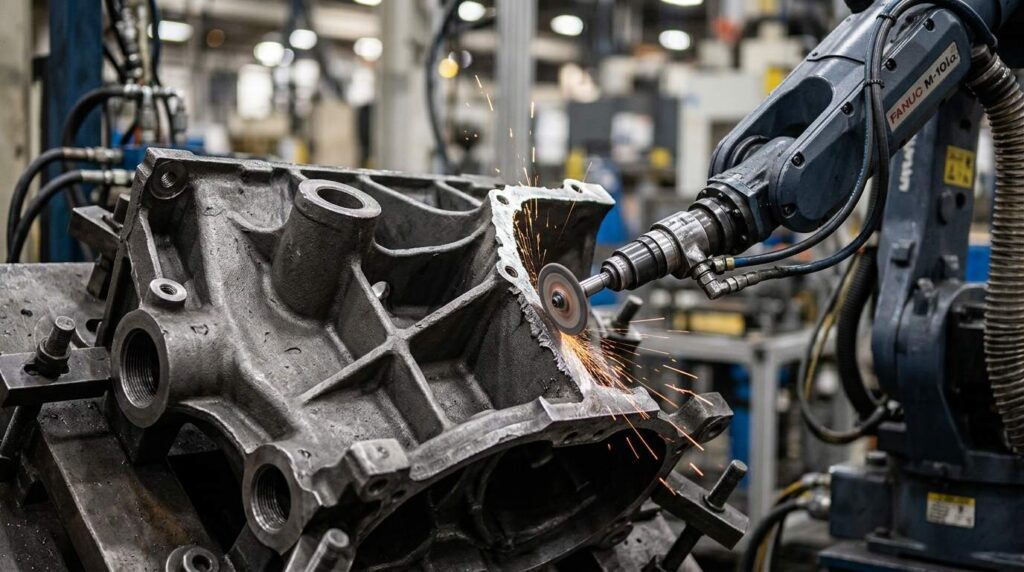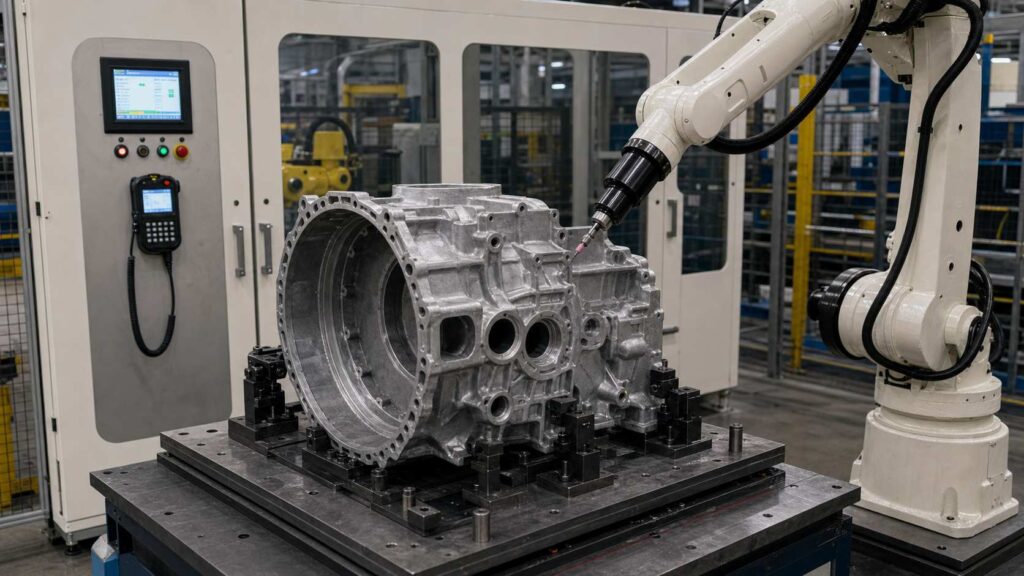
Large aluminum alloy engine gear housings are structural casting components used in automotive engine timing and gear transmission systems. As a class, these castings feature a large cavity opening, gear chamber areas, shaft holes, mounting holes, sealing flanges, reinforced ribs, thick wall sections and irregular outer contours, making post-casting deburring and local grinding more complex than on simple aluminum castings.
Данное роботизированное решение для удаления заусенцев и шлифования предназначено для крупных корпусов редукторов двигателей из алюминиевого сплава, типичные размеры которых составляют около 400–750 мм в длину в зависимости от модели двигателя. Оно позволяет удалять заусенцы, обломок, остатки линии разъема, острые кромки и локальные следы литниковых каналов с отверстий полости, отверстий под валы, монтажных отверстий, уплотнительных фланцев, переходов ребер и внешних контуров, одновременно повышая стабильность качества финишной обработки и снижая трудозатраты на ручную шлифовку.
What Is a Large Aluminum Alloy Engine Gear Housing?
Корпус редуктора двигателя из алюминиевого сплава представляет собой конструкционное литье, предназначенное для размещения и защиты систем редукторной передачи двигателя. Обычно он устанавливается в передней или боковой части блока цилиндров и содержит шестерни распределительного вала, ведущие шестерни, опоры подшипников и сопутствующие компоненты трансмиссии. По сравнению с головкой блока цилиндров или блоком цилиндров двигателя, корпус редуктора предназначен в первую очередь для защиты редукторной камеры, выравнивания валов и обеспечения герметичности, а не для выполнения функций, связанных с процессом сгорания или прохождением жидкостей.
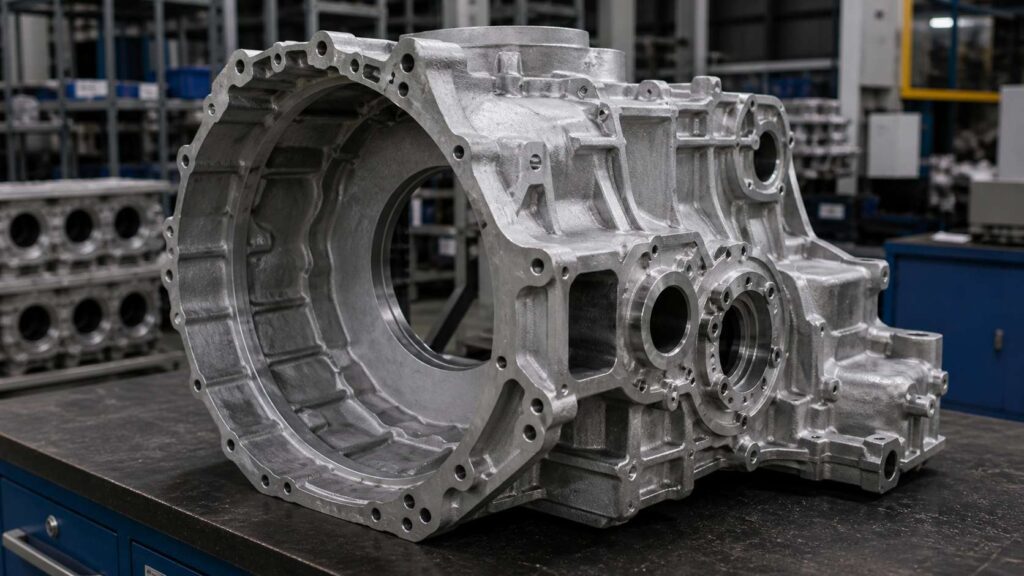
The defining feature is the large cavity opening for gear access, multiple shaft holes for gear shafts, bolt holes for mounting, continuous sealing flanges, reinforced ribs for structural strength, thick wall sections and local boss features. After casting, trimming and rough machining, burrs, flash, parting lines, gate residues or sharp edges may remain around cavity boundaries, shaft hole edges, mounting holes, flange edges, rib intersections and outer contours.
What this housing needs from finishing is deburring, controlled local grinding and edge cleanup, not a decorative surface.
| Артикул | Подробности |
|---|---|
| Название заготовки | Корпус редуктора двигателя из алюминиевого сплава большого размера |
| Альтернативное название | Корпус зубчатого механизма / Крышка зубчатого механизма двигателя |
| Типовой размер | Примерно 400–750 × 300–500 × 150–350 мм, в зависимости от модели |
| Материал | Литье из алюминиевых сплавов |
| Основной процесс | Роботизированная зачистка и шлифование |
| Процессы с поддержкой | Удаление заусенцев по краю полости, обработка отверстия вала, удаление обломоков, локальная очистка поверхности |
| Основные направления деятельности | Большое отверстие рабочей камеры, отверстия для вала, монтажные отверстия, уплотнительные фланцы, усилительные ребра, участки с толстыми стенками, наружные контуры, зоны выреза затвора |
| Охраняемые территории | Отверстия под подшипники, уплотнительные поверхности, обработанные монтажные поверхности, прецизионные отверстия в валах, рабочие поверхности редукторной камеры |
| Финальный гол | Удаление заусенцев, обломов, острых краев и локальных остатков с одновременной защитой функциональных поверхностей прецизионных зубчатых передач |
Типичные проблемы при финишной обработке крупных корпусов зубчатых передач двигателя из алюминиевого сплава
Корпус редуктора двигателя из алюминиевого сплава больших размеров представляет собой сложную задачу для механической обработки, поскольку в его конструкции сочетаются обширная полость с множеством прецизионных отверстий, уплотнительных фланцев и усилительных ребер. Заусенцы могут образовываться вокруг отверстий полости, границ отверстий для валов, монтажных отверстий, краев фланцев, оснований ребер и в местах перехода от тонких стенок к толстым. Эти участки требуют применения инструментов с различными углами наклона и разной интенсивностью съема материала.
Ручная удаление заусенцев и шлифовка могут быть нестабильными, поскольку операторам приходится проникать в обширные полости, работать вокруг множества отверстий для валов и проходить по длинным участкам уплотнительных фланцев. Некоторые заусенцы внутри углов полости или в местах пересечения ребер могут остаться незамеченными, в то время как открытые кромки фланца могут быть чрезмерно отшлифованы. Поскольку корпус редуктора содержит прецизионные отверстия под подшипники и уплотнительные поверхности, неконтролируемое ручное шлифование может повредить поверхности отверстий под валы, уплотнительные поверхности или монтажные сопряжения.
| Распространенная проблема | Конкретная область | Воздействие |
|---|---|---|
| Литейные заусенцы / Линии разъема | Внешний контур, уплотнительный фланец, края отверстия полости | Влияет на однородность кромок и подготовку поверхности к герметизации |
| Остатки на воротах | Участки с вырезами в области затвора на участках с толстыми стенками или в области выступов | Требуется контролируемое локальное измельчение |
| Острые края | Отверстие полости, отверстия для вала, монтажные отверстия | Создает риски, связанные с обращением и сборкой |
| Остаточные заусенцы | Места пересечения ребер, границы выступов, локальные переходы | Приводит к нестабильному качеству отделки и проблемам при контроле качества |
| Ручное изменение | Повторяющиеся отверстия, кромки полостей и траектории фланцев | Приводит к несогласованности результатов между операторами |
| Чувствительные функциональные области | Отверстия под подшипники, уплотнительные поверхности, обработанные монтажные поверхности | Риск повреждения при ручной зачистке или шлифовании |
Процесс роботизированной зачистки и шлифования крупных корпусов зубчатых колес двигателя из алюминиевого сплава
A robotic deburring and grinding cell for large aluminum alloy engine gear housings should be designed around part stability, cavity accessibility, controlled material removal and protected-surface management, and 6-axis deburring equipment is what makes the deep cavity and flange edges reachable. The process must remove burrs, flash and local residues from the housing body, cavity edges, holes and flanges while avoiding contact with bearing holes, sealing surfaces and machined mounting faces.
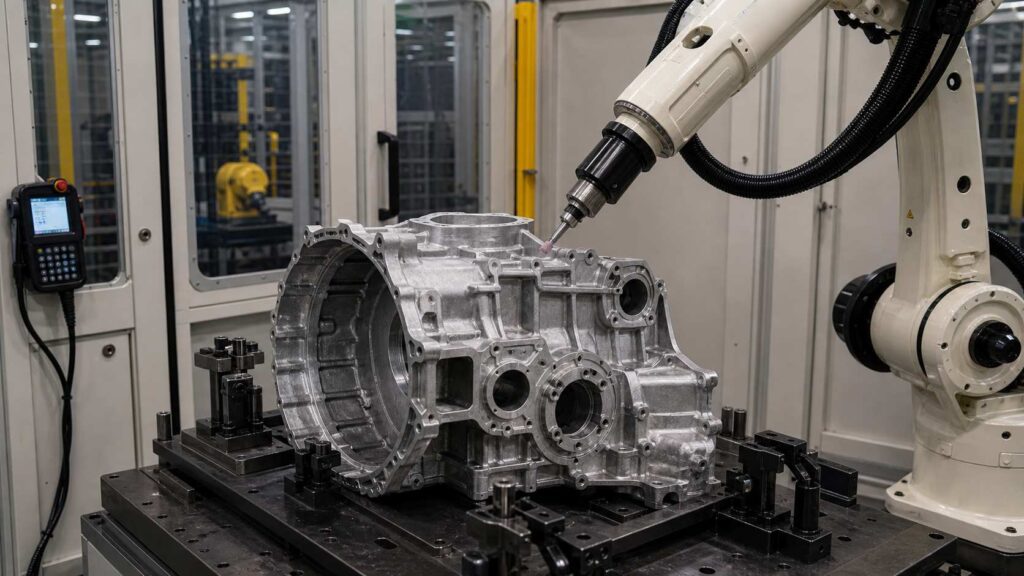
В случае корпусов редукторов крупных двигателей, типичные размеры которых составляют около 400–750 мм в длину, технологический процесс обычно включает в себя загрузку, выбор программы, подтверждение зоны защиты, шлифование внешнего контура, удаление заусенцев в отверстиях полостей, обработку отверстия для вала, очистку уплотнительного фланца, финишную обработку переходов ребер, контроль качества и разгрузку. Для обработки различных участков могут использоваться различные инструменты, в том числе абразивные шлифовальные инструменты, гибкие инструменты для удаления заусенцев, инструменты для снятия фасок и небольшие головки для чистовой обработки.
| Шаг | Процесс | Назначение | Инструмент / Система |
|---|---|---|---|
| 1 | Загрузка и позиционирование | Закрепите корпус редуктора для обеспечения удобного доступа со всех сторон | Специализированное приспособление |
| 2 | Выбор программы | Сопоставьте правильную модель корпуса и траекторию движения робота | Программа для интерфейса человека-машины / робота |
| 3 | Подтверждение статуса охраняемой территории | Определить зоны подшипников, уплотнений и прецизионные зоны, не подлежащие шлифовке | Логика работы оборудования / Настройка программы |
| 4 | Шлифование внешних контуров и линий разъема | Удалите обломок и остатки с внешних краев отливки | Абразивный шлифовальный инструмент |
| 5 | Удаление заусенцев на больших отверстиях | Удалите заусенцы и острые кромки с границ полости | Гибкий инструмент для удаления заусенцев |
| 6 | Обработка кромок отверстий вала | Удалите заусенцы из отверстий вала и отверстий, связанных с подшипниками | Инструмент для снятия фасок / Шпиндель для удаления заусенцев |
| 7 | Очистка кромки уплотнительного фланца | Удалите заусенцы с кромок фланца непрерывного уплотнения | Гибкий инструмент для удаления заусенцев |
| 8 | Обработка переходных участков между ребрами и выпуклостями | Обработка корней ребер, границ выступов и локальных переходов | Малая шлифовальная головка / Гибкий инструмент |
| 9 | Контроль качества | Проверьте удаление заусенцев и защищенные функциональные зоны | Ручной или визуальный осмотр |
| 10 | Разгрузка и очистка | Удалите стружку и перенесите корпус редуктора | Продувка воздухом / Вакуумная очистка |
Шаг 1: Загрузка и размещение
Крупный корпус редуктора двигателя из алюминиевого сплава устанавливается в специальное приспособление, которое фиксирует отливку, опираясь на устойчивые некритические участки. Поскольку заготовка имеет сложную полостную конструкцию и множество прецизионных отверстий, жесткость приспособления играет важную роль для обеспечения стабильного роботизированного шлифования и удаления заусенцев.
Зажимное приспособление должно обеспечивать роботу доступ к внешнему контуру, отверстию полости, отверстиям вала, уплотнительному фланцу, ребрам жесткости и монтажным отверстиям. Стабильное позиционирование также способствует соблюдению безопасного зазора от защищенных отверстий под подшипники, уплотнительных поверхностей и обработанных монтажных поверхностей.
Шаг 2: Выбор программы
После закрепления корпуса редуктора оператор выбирает нужную программу робота через интерфейс HMI. Это важно, поскольку модели корпусов редукторов могут различаться по форме полости, расположению отверстий для валов, конфигурации фланцев, структуре ребер жесткости и схеме расположения монтажных отверстий.
Sequence, tools, postures, feed rate, contact force and protected zones are all fixed in the program. Because the same program is recalled batch after batch, deburring and grinding results stay consistent.
Шаг 3: Подтверждение охраняемой территории
Перед началом обработки система определяет зоны, требующие защиты, в корпусе редуктора. К ним обычно относятся отверстия для подшипников, поверхности отверстий для валов, уплотнительные поверхности, обработанные монтажные поверхности, прецизионные отверстия и функциональные поверхности камеры редуктора.
Этот этап имеет решающее значение, поскольку многие кромки, на которых часто образуются заусенцы, находятся в непосредственной близости от прецизионных элементов. Робот должен удалять заусенцы с границ кромок и переходов литейных форм, при этом не допуская соприкосновения абразивных инструментов с поверхностями, которые влияют на выравнивание зубчатых колес, герметичность и точность размеров.
Шаг 4: Шлифование внешнего контура и линии разъема
Work starts on the outside of the casting. Side walls, outer flanges, corner transitions, mounting bosses and gate-cut sections are the spots where flash, parting line residues, trimming marks and local defects cling, and the abrasive tool clears them one segment at a time.
Абразивный шлифовальный инструмент позволяет удалять выступающие дефекты при контролируемой скорости подачи и давлении прижима. При обработке корпусов шестерен из алюминиевых сплавов следует избегать чрезмерного давления, которое может привести к образованию глубоких следов от инструмента или к чрезмерному снятию материала с отливки.
Шаг 5: Удаление заусенцев с большого отверстия полости
Большое отверстие полости является ключевой особенностью корпуса редуктора. После литья, обрезки или черновой обработки на границах полости могут появиться заусенцы или острые кромки, однако сама поверхность полости должна оставаться неповрежденной.
Гибкий инструмент для снятия заусенцев позволяет очищать кромку полости с контролируемым давлением и по запрограммированной траектории. Робот должен обрабатывать только границу кромки и избегать контакта с прецизионными поверхностями камеры зубчатого колеса или обработанными функциональными участками.
Шаг 6: Обработка краев отверстия вала
Отверстия для валов являются критически важными элементами, которые служат опорой для валов зубчатых колес и подшипников. Заусенцы по краям этих отверстий могут повлиять на вставку вала, установку подшипника или выравнивание узла при сборке.
С помощью инструмента для снятия фаски или шпинделя для удаления заусенцев можно обрабатывать каждое отверстие вала с постоянной глубиной и углом. Робот повторяет одну и ту же последовательность действий для всех групп отверстий, что повышает однородность кромок отверстий и снижает погрешности, возникающие при ручной обработке.
Шаг 7: Очистка края уплотнительного фланца
Уплотнительный фланец представляет собой непрерывную кромку, которая требует тщательного удаления заусенцев для обеспечения надлежащего уплотнения прокладки. После литья или обрезки вокруг фланца могут оставаться небольшие обломки и острые кромки.
With a flexible tool tracking the flange perimeter at set contact pressure, sharp edges and loose burrs come off while the sealing surface and flange geometry stay exactly as designed.
Шаг 8: Завершение обработки перехода между ребристой частью и выступом
На усиленных ребрах, выпуклых выступах и участках перехода после литья могут оставаться небольшие заусенцы. До этих участков зачастую трудно добраться вручную, поскольку это требует частых изменений угла наклона инструмента.
Для обработки этих локальных участков можно использовать небольшую шлифовальную головку или гибкий инструмент для снятия заусенцев. Робот может разделить конструкцию из ребер и выступов на несколько зон финишной обработки и обрабатывать каждый переход, сохраняя стабильное положение, что позволяет уменьшить количество остаточных заусенцев в скрытых или углубленных участках.
Шаг 9: Контроль качества
After robotic deburring and grinding, operators inspect the outer contours, cavity opening, shaft holes, sealing flange, mounting holes, rib transitions and gate-cut areas. The inspection verifies that every listed edge is clean and that protected surfaces came through untouched.
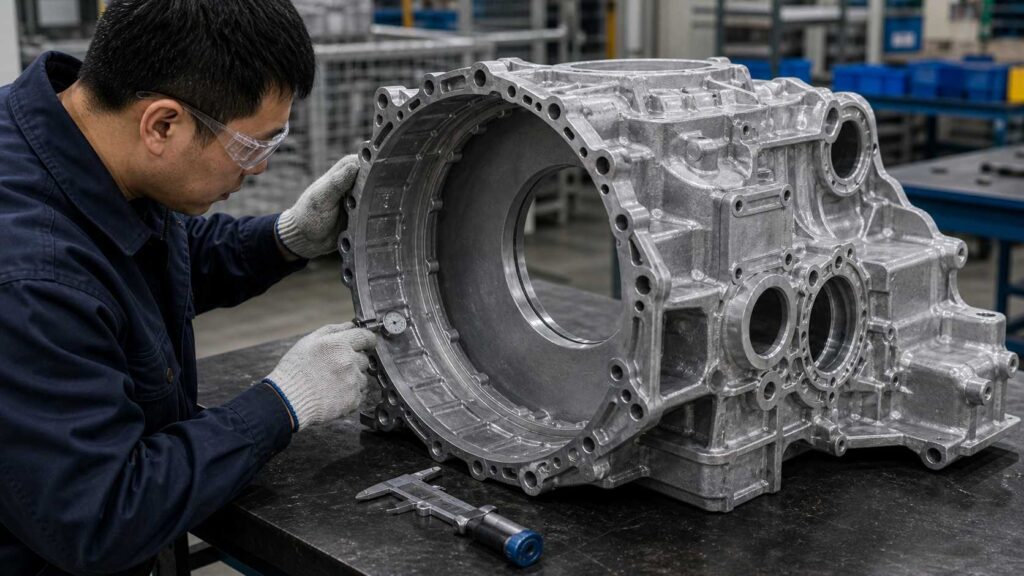
Visual checks, touch checks, gauges or camera verification can be mixed and matched to what the line needs. What the inspection finds feeds back into tool wear compensation, local path corrections and maintenance planning.
Шаг 10: Разгрузка и очистка
После проверки корпус редуктора разгружается и передается на следующий этап производства. Алюминиевую стружку и мелкие частицы необходимо удалить из полостей, отверстий для валов, уплотнительных фланцев и монтажных отверстий.
Для удаления заусенцев и шлифования корпусов зубчатых передач рекомендуется использовать закрытую роботизированную ячейку с системой сбора алюминиевой стружки и пыли. Это позволяет повысить уровень чистоты, снизить воздействие вредных факторов на оператора и создать более контролируемые условия для финишной обработки по сравнению с открытым ручным шлифованием.
Проблемы при механической обработке и их решения
| Задача | Причина | Роботизированное решение |
|---|---|---|
| Обработка деталей с большими полостями | Корпус редуктора имеет большую открытую полость, требующую доступа под разными углами | Специализированное приспособление и стабильное позиционирование робота |
| Фрезы с зазубринами по краю рабочей полости | Границы больших полостей требуют очистки кромок, однако поверхности камеры необходимо защитить | Контролируемая траектория удаления заусенцев с зонами камеры, в которых шлифование не производится |
| Заусенцы в отверстиях вала | В отверстиях нескольких валов остаются заусенцы, что требует постоянной обработки | Цикл снятия фасок или заусенцев с фиксированной глубиной |
| Соответствие уплотнительного фланца | Сплошной фланец образует длинные кромки вблизи зон прокладок | Запрограммированная траектория снятия заусенцев с края фланца |
| Фрезы с ребрами и выпуклостями | Усиленные элементы приводят к образованию скрытых заусенцев | Доступ к небольшим инструментам с разделенными зонами локальной чистовой обработки |
| Функциональная защита поверхностей | Отверстия под подшипники и уплотнительные поверхности не должны быть повреждены | Программирование защищенных зон и точная привязка к зажимным приспособлениям |
Проблема 1: Позиционирование корпуса крупного редуктора и доступ к полости
Корпус редуктора крупного двигателя представляет собой трехмерное литье с большим отверстием полости и множеством внешних элементов. Робот должен обрабатывать наружные контуры, кромки полости, отверстия для валов, уплотнительные фланцы и ребра, не теряя при этом устойчивости инструмента.
Решением является использование специального приспособления для корпуса редуктора, обеспечивающего стабильную опору и повторяемое позиционирование. Это позволяет роботу подходить к различным зонам обработки в предсказуемом положении, одновременно снижая вибрацию во время шлифования и удаления заусенцев.
Задача 2: Удаление заусенцев с краев отверстия полости без повреждения камеры
На краях большого отверстия полости могут присутствовать заусенцы или острые кромки, однако сама поверхность камеры шестерни представляет собой прецизионную рабочую зону. Рубная удаление заусенцев может быть сопряжено с риском, если инструмент соскользнет или порежет поверхность камеры.
Решением является использование контролируемой траектории удаления заусенцев с заданными зонами, в которых шлифование не производится. Робот удаляет заусенцы с края полости, при этом удерживая инструмент на безопасном расстоянии от прецизионной стенки камеры и связанных с ней обработанных поверхностей.
Сложность 3: Обработка краев отверстий с несколькими валами
Отверстия для валов часто располагаются на разных поверхностях корпуса редуктора. В этих отверстиях могут оставаться заусенцы, которые трудно полностью удалить вручную.
Решением является использование инструмента для снятия фасок или шпинделя для удаления заусенцев с локальными программами обработки для каждого отверстия. Робот обрабатывает каждую кромку отверстия вала с повторяемым углом и глубиной, что позволяет сократить количество пропущенных заусенцев и повысить стабильность результатов контроля.
Проблема 4: Обеспечение однородности кромки уплотнительного фланца
Уплотнительный фланец представляет собой непрерывную кромку, которая требует равномерного удаления заусенцев для обеспечения надлежащего уплотнения прокладки. При ручной обработке по всей длине фланца могут возникать неравномерности по краю.
Here the fix is a programmed flange-edge path: the robot walks the contour under controlled pressure so burrs come off without the tool ever landing on the sealing face itself.
Сложность 5: Защита подшипниковых отверстий и монтажных поверхностей
Корпуса редукторов имеют отверстия для подшипников, уплотнительные поверхности, прецизионные отверстия и обработанные монтажные поверхности. Эти поверхности находятся в непосредственной близости от кромок, на которых часто образуются заусенцы, однако их нельзя поцарапать или перешлифовать.
Решением является определение всех элементов, требующих высокой точности, в качестве защищенных зон в программе робота. Робот обрабатывает только те участки, где имеются заусенцы, и не допускает соприкосновения абразивных инструментов с функциональными сопряжениями, которые влияют на выравнивание зубчатых колес и точность сборки.
Application Scenario
Scenario Background
Large timing and gear transmission housings are heavy, high-feature-count castings: before automation, every one of them needs burrs, flash, local residues and sharp edges removed by hand from outer contours, cavity openings, shaft holes, sealing flanges, ribs and mounting holes.
Manual finishing cannot hold a standard on parts this complex. Cavity corners and rib intersections come out under-processed, exposed flange edges get over-ground, and the cycle repeats every batch. A robotic deburring and grinding cell addresses all three at once: consistency, workload and protection of gear-related surfaces.
Технические проблемы
The housing geometry stacks a large cavity opening, multiple shaft holes, sealing flanges, mounting holes, bosses, ribs and substantial outer contours into one part. Burr locations span external edges and internal cavity boundaries alike, each calling for its own tool and posture.
Striking the removal-versus-protection balance is the central problem. Gate cuts and parting line residues demand local grinding on one side of the part while bearing holes, sealing faces and machined mounting surfaces on the other must remain untouched.
Решение
One way to equip the cell for this casting is a six-axis industrial robot, a dedicated housing support fixture and four tool stations: an abrasive grinding tool for outer contour flash and gate residues, a flexible deburring tool for cavity and flange edges, a chamfering tool for shaft and mounting holes, and a small grinding head for rib and boss transitions.
The program carries a full protected-surface list covering bearing holes, sealing faces, machined pads and precision holes. Its fixture holds the housing firm yet leaves every side reachable for the robot, and the enclosed cell pulls aluminum chips and dust out of the air as the tools work.
| Артикул | Конфигурация |
|---|---|
| Заготовка | Корпус редуктора двигателя из алюминиевого сплава большого размера |
| Типовой размер | Примерно 400–750 × 300–500 × 150–350 мм, в зависимости от модели |
| Основной процесс | Роботизированная зачистка и шлифование |
| Процесс с поддержкой | Удаление заусенцев по краю полости, обработка отверстия вала, удаление обломоков, локальная очистка поверхности |
| Робот | Шестиосевой промышленный робот |
| Инструментарий | Абразивный шлифовальный инструмент, гибкий инструмент для удаления заусенцев, инструмент для снятия фасок, шпиндель для удаления заусенцев, упругий инструмент для финишной обработки |
| Расписание | Специальное приспособление для крепления картера редуктора двигателя |
| Стратегия защиты | Защищенные отверстия под подшипники, уплотнительные поверхности, обработанные поверхности и прецизионные отверстия |
| Борьба с запыленностью | Закрытая камера с системой улавливания алюминиевой стружки и пыли |
Результаты внедрения
The robotic cell took over repetitive deburring and grinding work on outer contours, cavity opening, shaft holes, sealing flanges, mounting holes, rib transitions and local gate-cut areas. With the robot doing the finishing, personnel cover loading, unloading, inspection and tool maintenance only, and batch quality stops wandering between operators.
Контролируемый процесс также позволил улучшить защиту поверхностей, связанных с прецизионными зубчатыми колесами. Вместо того чтобы полагаться исключительно на ручное управление инструментом, робот следовал по заранее заданным траекториям с определёнными защитными зонами, что снизило риск случайного контакта вблизи отверстий под подшипники, уплотнительных поверхностей и монтажных плоскостей.
| Область результатов | Улучшение |
|---|---|
| Качество внешнего контура | Более ровная обработка краев отливки и контуров боковых стенок |
| Удаление заусенцев по краю полости | Контролируемое удаление заусенцев по краям больших полостей |
| Обработка отверстий вала | Повторяемая обработка для удаления заусенцев вокруг отверстий для вала и подшипников |
| Очистка уплотнительного фланца | Однородное состояние кромки вдоль непрерывной линии хода фланца |
| Обработка ребер и выступов | Снижение количества пропущенных заусенцев в корнях ребер и на переходах выступов |
| Очистка литника / линии разъема | Специальные локальные трассы для более плотных литейных отходов |
| Функциональная защита поверхностей | Снижение риска повреждения отверстий под подшипники и уплотнительных поверхностей |
| Сокращение трудозатрат | Сокращение объема ручной работы по удалению заусенцев и шлифованию |
| Стабильность производства | Сохраненные программы для повторных партий редукторных корпусов |
| Условия проведения семинара | Более чистая зона финишной обработки с закрытой системой сбора алюминиевой стружки |
Информация, необходимая для подготовки предложения по роботизированной шлифовке
Чтобы порекомендовать подходящую роботизированную ячейку для удаления заусенцев и шлифования вашего крупногабаритного корпуса редуктора двигателя из алюминиевого сплава, нам, как правило, необходимы чертеж детали, марка материала, вес отливки, фотографии заусенцев, облоя, остатков в полости формы или участков обрезания литника, области, подлежащие обработке, защищенные поверхности подшипников или уплотнений, текущее время цикла ручной обработки и годовой объем производства.
Fixture design, robot reach, tool selection, chip collection layout and feasibility can all be judged from these details. For large aluminum alloy engine gear housings, it is especially important to identify which cavity edges, shaft holes, flange boundaries and outer contours require burr removal, and which bearing holes, sealing faces and precision holes must be protected during robotic finishing.
ЧАСТО ЗАДАВАЕМЫЕ ВОПРОСЫ
Q1: Is an engine gear housing the same as an engine cylinder head or cylinder block?
All three are distinct. An engine gear housing is a transmission-related casting that encloses timing gears and drive gears. An engine cylinder head includes combustion chamber and port features, while a cylinder block is the main engine body with cylinder bores. All three are different components with different functions and deburring requirements; for a transmission main case in the same family, see our CVT transmission main housing deburring and grinding solution.
Q2: Why is robotic deburring and grinding suitable for engine gear housings?
Роботизированная удаление заусенцев и шлифование подходят для обработки корпусов зубчатых колес, поскольку они имеют большие отверстия полости, множество отверстий для валов, сплошные уплотнительные фланцы и усилительные ребра. Робот может двигаться по запрограммированным траекториям с контролируемым усилием прилегания, что обеспечивает более стабильное качество обработки по сравнению с ручной доработкой.
Q3: What areas can the robot process on an engine gear housing?
The robot can process outer contours, cavity opening edges, shaft holes, sealing flanges, mounting holes, boss boundaries, rib transitions, parting line areas and local gate residues. Drawing review and a burr survey on sample castings define exactly where the robot may cut.
Q4: Does this part require decorative polishing?
Engine gear housings carry no decorative-polishing requirement in normal applications. The work is deburring, local grinding, flash removal, cavity edge cleanup and edge rounding. If finer surface work is needed elsewhere on your line, our robotic polishing machine guide covers that equipment separately.
Q5: How are bearing holes and sealing surfaces protected during grinding?
Bearing holes, sealing faces and precision holes are protected through fixture positioning, robot path planning and no-grind zones. The abrasive only ever touches the specific edge or residue area it was sent to; bearing holes, sealing faces and other critical surfaces are off-limits in the path plan.
Q6: Can one robotic cell handle different gear housing models?
Да. Одна роботизированная ячейка зачастую может обрабатывать различные модели корпусов редуктора двигателя из алюминиевого сплава, если зажимное приспособление, радиус действия робота и инструмент рассчитаны на вариации деталей. Для различных форм полостей, схем расположения отверстий под валы или номеров деталей можно сохранять разные программы робота.
Заключение
Корпуса зубчатых передач двигателей из алюминиевого сплава имеют большие отверстия полости, множество отверстий для валов, уплотнительные фланцы, монтажные отверстия, ребра жесткости и сложные наружные контуры, что затрудняет стандартизацию процессов ручной зачистки и шлифования. Решение для роботизированной зачистки и шлифования помогает производителям удалять заусенцы, обломки, острые кромки и локальные остатки материала, одновременно повышая стабильность качества и обеспечивая защиту критически важных функциональных поверхностей зубчатых передач.
Если при производстве корпусов редукторов вашего двигателя по-прежнему применяются ручные методы удаления заусенцев по краям полостей, обработки отверстий для валов, очистки уплотнительных фланцев или локального шлифования остатков литья, Свяжитесь с нами for a customized robotic solution. Broader context is in our Автомобили и электромобили applications; for machine dimensions and tool options see Оборудование.