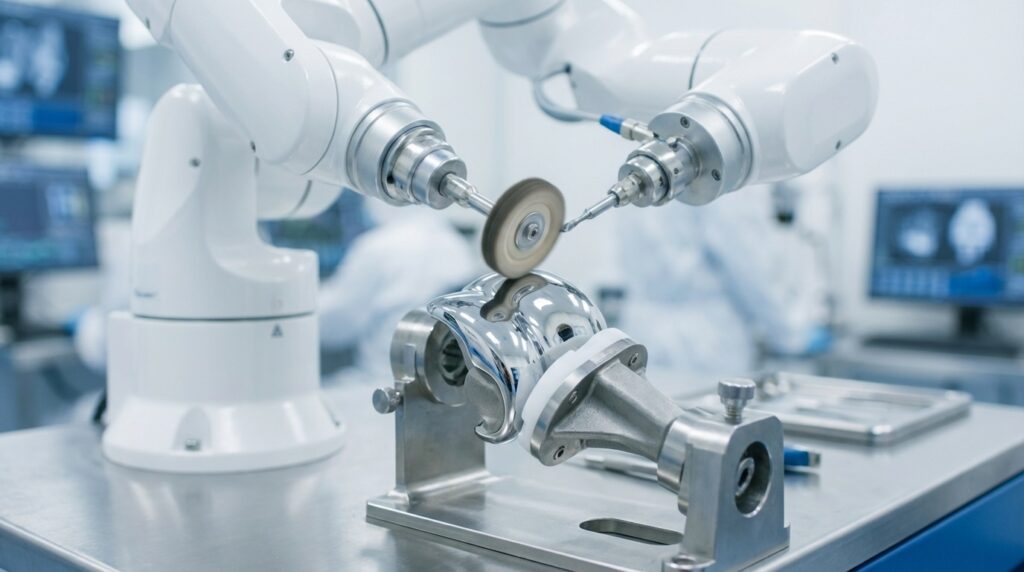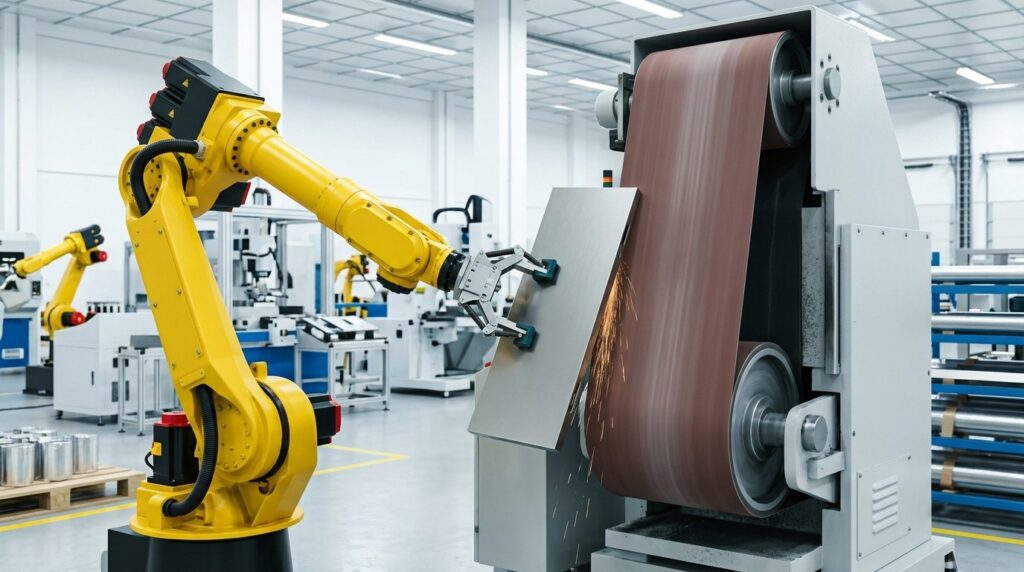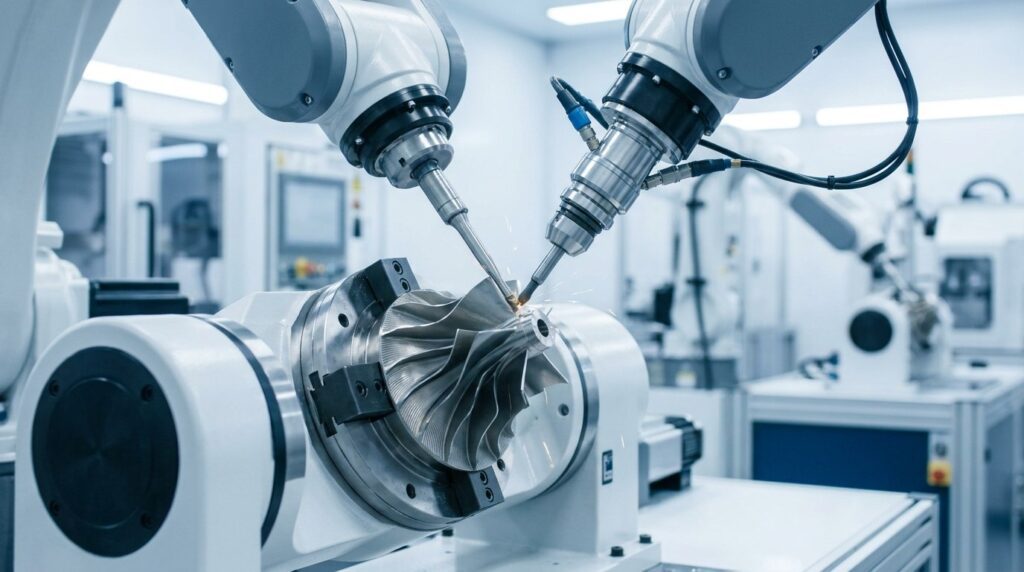
In aerospace manufacturing, turbine and compressor blades are among the most demanding components a finishing shop will ever see. As the core kinetic energy conversion components of jet engines and heavy-duty gas turbines, their surface quality directly influences the engine’s thrust-to-weight ratio, fuel efficiency, and flight safety. This article provides an in-depth analysis of the core challenge: deburring and precision polishing Titanium and Nickel-based Superalloy blades. We examine how automated robotic systems—equipped with active force control and Offline Programming (OLP) technologies—address the aerodynamic profile distortion and inconsistency risks of manual grinding, delivering stable micron-level precision.
ما هي شفرة التوربينات الفضائية؟
Aerospace turbine blades are installed in the compressor or turbine sections of jet engines. They operate under extreme physical environments: high-speed centrifugal forces of tens of thousands of RPMs, and gas temperatures that reach far beyond what most alloys can tolerate in the hot turbine section—where nickel-based superalloy blades dominate. In the cooler front compressor stages, titanium alloy blades are standard, and it is these titanium compressor blades, together with nickel-based turbine hardware, that set the agenda for finishing equipment.
سيناريوهات تطبيقات تصنيع شفرات التوربينات
سواءً كانت لمحركات الطائرات التجارية (مثل سلسلة LEAP أو سلسلة Trent) أو التوربينات الغازية الثقيلة لمحطات الطاقة، يتم تصنيع هذه الشفرات عادةً من سبائك التيتانيوم التي يصعب تصنيعها أو السبائك الفائقة القائمة على النيكل (مثل Inconel أو Hastelloy) عن طريق الصب الاستثماري الدقيق أو التصنيع الآلي باستخدام الحاسب الآلي ذي 5 محاور.
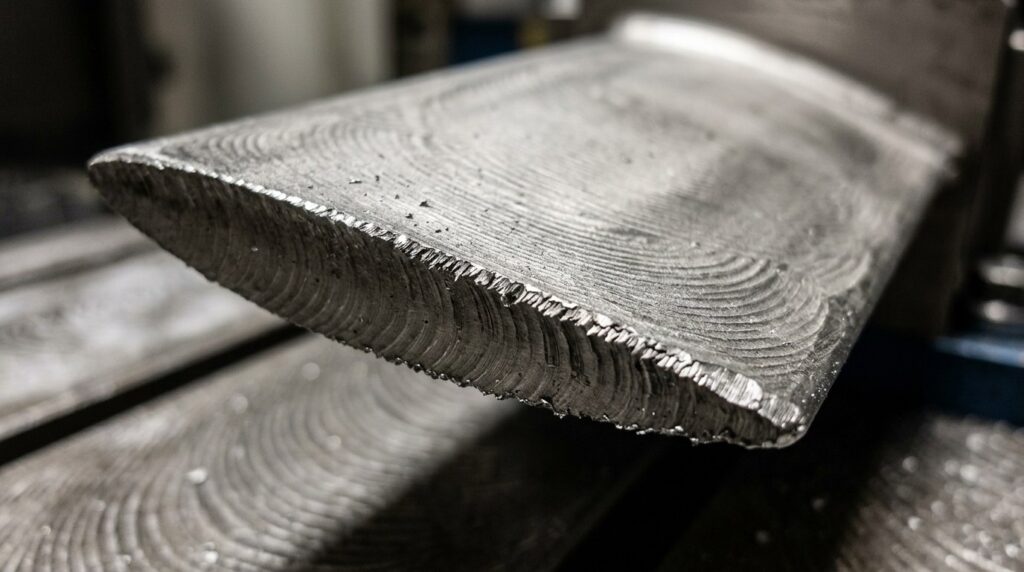
After primary machining, the blade surfaces are left with distinct microscopic tool marks. Furthermore, sharp flash and burrs are generated around the complex root/dovetail sections, as well as along the highly delicate Leading Edge (LE) and Trailing Edge (TE). If these surface defects are not removed through extremely precise polishing, they can cause stress concentrations and accelerate fatigue cracking, with potentially catastrophic consequences in flight.
الخصائص الهيكلية لشفرة التوربينات
يفرض التركيب الهندسي لشفرات التوربينات تحديات كبيرة على المعالجة السطحية:
- الأسطح الأيروديناميكية الهوائية المعقدة للغاية (ملف الجنيح الهوائي): The pressure and suction sides of the blade are 3D free-form surfaces shaped by rigorous fluid-dynamics design. Even a minute alteration to their shape can trigger airflow separation and reduce engine efficiency.
- حواف ميكرون رقيقة: تكون الحواف الأمامية والخلفية للشفرة رفيعة للغاية (أحيانًا يبلغ قياسها أجزاء من المليمتر). سيؤدي أدنى طحن زائد إلى تدمير المقطع العرضي المثالي “للدمعة”.
- المواد التي يصعب تصنيعها آلياً (السبائك الفائقة): Titanium and superalloys combine high strength with extremely poor thermal conductivity. They are highly susceptible to thermal burning or surface hardening layers during grinding.
الخصائص الرئيسية لتلميع ريش التوربينات
الخصائص الرئيسية:
- إخلاص الملف الشخصي المطلق: يجب ألا تغير عملية إزالة الحواف والصقل أبدًا الأبعاد ثلاثية الأبعاد الأصلية التي تم إنشاؤها بواسطة ماكينة التحكم الرقمي خماسية المحاور. يجب التحكم بدقة في إزالة المواد على مستوى الميكرون.
- خشونة السطح الرائعة: مطلوب عادةً لتحقيق مستويات دقة تتراوح بين 0.2 - 0.4 ميكرومتر Ra للحد من السحب الاحتكاكي الهوائي إلى أقصى حد.
- الضغط الانضغاطي المتبقي الثابت: يجب ألا تقتصر عملية التلميع على تنعيم السطح فحسب، بل يجب أن تتجنب توليد تشققات دقيقة. وغالبًا ما يتم الجمع بينها وبين الصقل بالخردق لإحداث طبقة ضغط انضغاطية مفيدة، مما يعزز مقاومة التعب.
المعلمات الفنية لتلميع الشفرات
| البند | نطاق المعلمات | الملاحظات |
| إزالة النتوءات وعلامات الأدوات | أحزمة من السيراميك/الأكسيد الألومنيوم الحبيبي الناعم | يتطلب مواد استهلاكية محددة لسائل التبريد للتيتانيوم |
| طلاء الجنيح الدقيق | عجلة صوف / مواصفات غير منسوجة | يُستخدم مع مركب الفضاء الجوي لإزالة جميع الخدوش الدقيقة |
| التحكم في قوة الاتصال | 2N - 15N (التردد العالي جداً) | “مزج ”لمسة الريشة"، يحمي الحواف الرقيقة تمامًا |
| خشونة السطح النهائية | ر ≤ 0.4 ميكرومتر | Finished to the OEM engine specification on the drawing |
| التحكم في تحمل الكفاف | ± 0.01 مم | يعتمد على التحكم في القوة على مستوى 1000 هرتز على مستوى الميكرون والرؤية ثلاثية الأبعاد |
لماذا يجب أن تستخدم شفرات الفضاء الجوي التلميع الآلي؟
العيوب القاتلة للطحن اليدوي التقليدي
في الماضي، كان صقل شفرات الطيران الفضائية يعتمد بشكل كبير على “إحساس” الحرفيين الماهرين الذين يتمتعون بعقود من الخبرة. ومع ذلك، نظرًا للمتطلبات القاسية للإنتاجية والقدرة في مجال تصنيع الطيران الحديث، لم يعد الطحن اليدوي مستدامًا:
| نقطة الألم | مشكلة محددة | التأثير |
| Steep “Over-Cut” Scrap Costs | Superalloy blades are high-value parts. Manual grinding easily cuts tens of microns too deep on the trailing edge. | Scrapping one blade can mean losing thousands of dollars, and manual yields are difficult to hold at a consistently high level. |
| كوارث اتساق الملف الشخصي | يتطلب المحرك مئات الشفرات. إذا صقلها عمال مختلفون، فإن المظهر الديناميكي الهوائي الفعلي لكل شفرة يختلف قليلاً. | يؤدي إلى مشاكل ديناميكية حادة في التوازن الديناميكي أثناء تجميع المحرك، مما يؤثر على قوة الدفع الكلية والاقتصاد في استهلاك الوقود. |
| الاحتراق الحراري والتغيرات المترولوجية | يخزن التيتانيوم الحرارة بسرعة. يتسبب السكون اليدوي المطول في ارتفاع الحرارة الموضعي مما يدمر خصائص التعب. | يزرع النباتات مخاطر شديدة وخفية على سلامة الطيران. |
مزايا الأتمتة الآلية الآلية
Introducing a robotic precision deburring system equipped with micron-level active force control is a practical route for the aerospace engine supply chain to achieve stable quality control and fully traceable delivery. If you are new to the underlying technology, our primer on what robotic deburring actually does is a good starting point:
| بُعد المقارنة | الطحن اليدوي | التلميع الآلي | التحسينات |
| إخلاص الملف الشخصي | خطأ كبير، يغير الشكل الهوائي بسهولة | قطع دقيق بالملليجرام، قوة ثابتة | Consistent contour accuracy across the blade set |
| التحكم في معدل الخردة | زلة واحدة من اليد تتسبب في خردة | الاستسلام الذكي ومراقبة منع التصادم | Eliminates human over-cutting; scrap from grinding errors drops sharply |
| تتبع البيانات | لا توجد بيانات محتفظ بها | قوة السجلات وإحداثيات كل قطع | Process data supports AS9100 audit requirements |
| كفاءة التصنيع الآلي | إخراج بطيء ومحدود للغاية | تعاون متعدد المحطات عالي السرعة | Substantially higher capacity for high-volume deliveries |
المزايا الأساسية:
- التحكم في القوة النشطة المتوافقة على مستوى الميكرون: This is the anchor for aerospace blade machining and the core capability that separates force-controlled robotic polishing machines from position-only automation. The force control system monitors the contact force between the tool and the blade at 1000Hz. When the robot processes the razor-sharp and fragile trailing edge, it automatically drops the pressure to mere Newtons (N), brushing away micro-burrs without eating into the parent material—true “deburring without harming the profile.”
- البرمجة دون اتصال بالإنترنت (OLP) والتوائم الرقمية: Blade surfaces are highly complex. Engineers directly import high-precision 3D CAD models, and the software automatically recognizes the aerodynamic surfaces, generating Normal Vector polishing paths that conform to the geometry. This avoids the deviations inherent in manual teaching, keeping every step of the robot’s motion tied to the CAD model.
سير عمل عملية التلميع الآلي لشفرة التوربينات
تستخدم هذه العملية 8 خطوات أساسية لمعالجة شفرة ضاغط التيتانيوم المتطورة من “فراغ محفور” إلى “سطح عالي الدقة”.”
التلميع الروبوتي لشفرة التوربينات الفضائية وإزالة الأزيز التدفق الكامل للعملية
| العملية | اسم العملية | المعدات | مستهلك | الوقت | الدقة/الغرض |
| 01 | مشبك عالي الدقة صفري الإجهاد. مشبك | الرقصة الهوائية الناعمة/التجميد الهوائي | - | 20s | يضمن دقة التكرار دون إحداث تشويه في التشبيك |
| 02 | إزالة الأزيز من الجذور | روبوت + مغزل عالي السرعة | شفرات الكربيد الدقيقة | 45s | مطاحن دقيقة تطحن بدقة وميضًا صلبًا من جذر شجرة التنوب المعقدة |
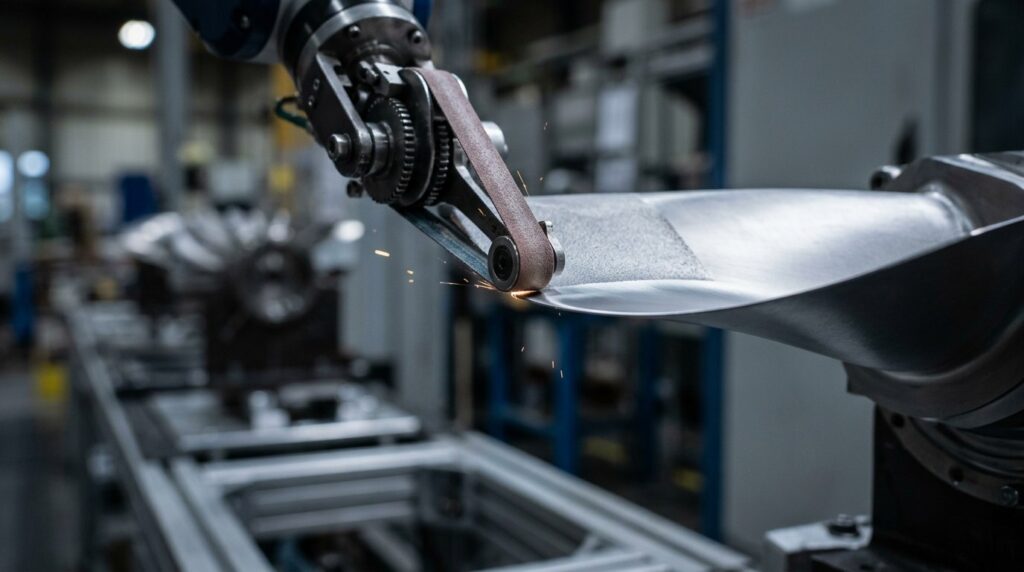
| 03 | مزج علامات الجنيح باستخدام الحاسب الآلي | روبوت + ماكينة صنفرة الحزام المتوافق | حزام أكسيد الألومنيوم فائق النعومة | 120s | يتبع المنحنيات الهوائية لمحو الموجات الدقيقة التي يتركها الطحن خماسي المحاور |
| 04 | المزج الدقيق بين الجنيه المصري/التركي | روبوت آلي + ماكينة صنفرة الحزام الصغير | مواد كاشطة هوائية مخصصة | 90s | يستخدم قوة خفيفة كالريشة للحفاظ على المقاطع العرضية للدموع |
| 05 | طلاء الجنيح الدقيق | روبوت + عجلة تلميع الصوف | معجون ميكرو معجون أيرو-جريد | 150s | Elevates surface finish to Ra < 0.4μm, reducing aero drag |
| 06 | تبريد MQL البارد | نظام رش MQL | سائل تبريد معتمد هوائياً | تابع. | تحكم صارم في درجة حرارة التلامس، مما يمنع حروق التيتانيوم |
| 07 | غسيل آلي بالموجات فوق الصوتية | خط الموجات فوق الصوتية متعدد الخزانات | المذيبات غير المدمرة | 180s | يزيل البقايا الكاشطة والمعدنية من المسام تمامًا |
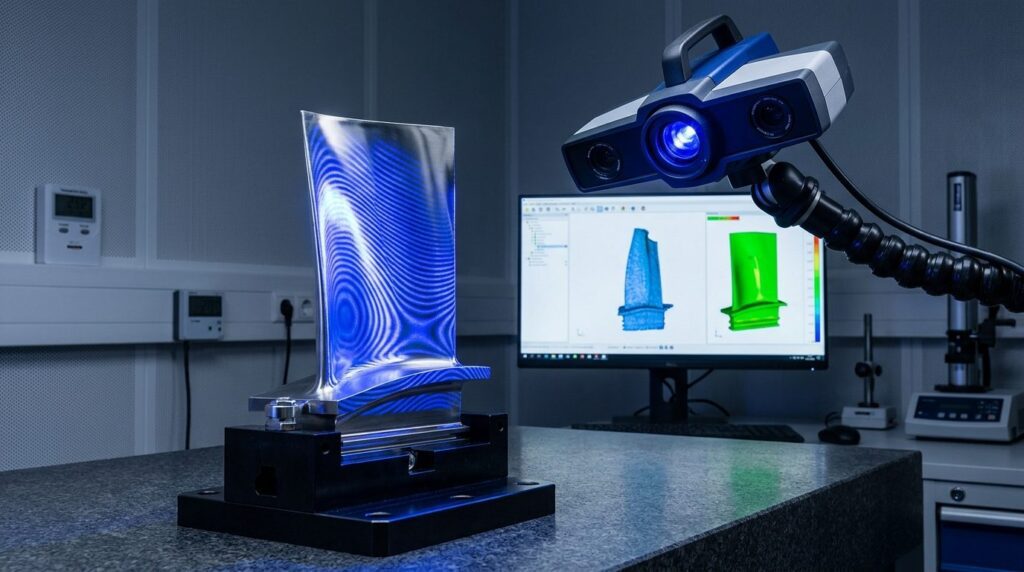
| 08 | مسح كامل للضوء الأزرق ثلاثي الأبعاد | ماسح ضوئي ثلاثي الأبعاد للملامح البصرية | - | 60s | Generates full 3D deviation color maps for inspection records |
أوصاف عملية التلميع الآلي لشفرة التوربينات الفضائية وإزالة الأزيز الروبوتية
الخطوة 1: التثبيت بدون إجهاد
الغرض: إمساك مستقر دون إحداث تشوه.
النقاط الرئيسية: نظرًا لأن الشفرات رقيقة للغاية، يتسبب التثبيت الميكانيكي الصلب التقليدي في ثني الشفرة نفسها. وعادةً ما يتم استخدام تركيبات لينة من البولي يوريثين المطابق المخصصة، أو في أكثر التطبيقات المتطورة تطرفًا، يتم استخدام الإمساك بالتجميد (باستخدام النيتروجين السائل) لتحقيق التثبيت الصلب المطلق مع عدم وجود إجهاد.
الخطوة 2: إزالة الأزيز من الجذور
الغرض: تنظيف جذر “شجرة التنوب” المعقدة المستخدمة للتركيب على قرص التوربينات.
النقاط الرئيسية: Leveraging the extreme 6-axis agility of the robot, it swaps to micro-tools to precisely dive into the complex gear-like grooves of the dovetail, clearing micro-flash without altering the critical assembly tolerances. Dovetail and fir-tree roots are among the most common geometries in industrial robotic deburring applications, and blade roots push the same tooling principles to their limit.
الخطوتان 3 و4: مزج الجنيح الهوائي وتشطيب الحواف
الغرض: التحدي الأساسي. محو علامات الأدوات مع الحفاظ على الشكل الأيروديناميكي الهوائي.
النقاط الرئيسية: This is where active force control matters most. Guided by OLP paths, the belt sander stays perpendicular (normal) to the free-form surface. The contact force drops automatically from 15N on the belly of the blade to under 2N the instant it reaches the razor-thin trailing edge.
الخطوة 5: الصقل الدقيق للجناح الهوائي
الغرض: تقليل خشونة السطح لتعزيز عمر التعب.
النقاط الرئيسية: يتحول إلى عجلات صوفية ناعمة للغاية مقترنة بوسائط تلميع محددة. تقوم بضرب السطح بنعومة على طول اتجاه تدفق الهواء، مما يزيل جميع نقاط تركيز الضغط المجهري المحتملة.
الخطوة 8: المسح الكامل للضوء الأزرق ثلاثي الأبعاد
الغرض: Full 3D inspection of every blade.
النقاط الرئيسية: يلتقط ماسح ضوئي أزرق عالي الدقة ملايين نقاط البيانات السحابية النقطية السطحية من الشفرة المصقولة، ويقارنها بالنموذج الأصلي ثلاثي الأبعاد للتصميم بمساعدة الحاسوب. سيؤدي أي قطع زائد أو قطع ناقص يتجاوز 0.01 مم إلى إطلاق تنبيه أحمر على خريطة ألوان الانحراف.
تحديات التصنيع الآلي وحلولها
التحدي 1: من الصعب للغاية قطع السبائك الفائقة وحرقها على الفور
المشكلة:
- تُستخدم السبائك الفائقة المصنوعة من التيتانيوم والنيكل (مثل Inconel 718) في المحركات النفاثة تحديدًا لأنها تحافظ على القوة والمتانة الشديدة في درجات الحرارة العالية.
- وهذا يعني أنه من الصعب للغاية طحنها. يؤدي الطحن التقليدي بسهولة إلى تآكل الأحزمة الكاشطة وتلاشيها على الفور، مما يولد حرارة احتكاك هائلة تحرق السطح على الفور، وتسبب تغير اللون التأكسدي، أو حتى تدمر البنية المعدنية الداخلية.
الحل:
- استراتيجية القطع على البارد + تشحيم MQL + تعويض التآكل الذكي.
- يستخدم النظام سرعات تغذية منخفضة للغاية مع ضغط ثابت وخفيف. طوال العملية، يقوم نظام التشحيم بالحد الأدنى من الكمية (MQL) برش السائل بدقة لنقل الحرارة بعيدًا عن منطقة القطع على الفور. وفي الوقت نفسه، يستشعر نظام التحكم في القوة تآكل المواد المستهلكة في الوقت الفعلي، ويقوم تلقائيًا بضبط التغذية الدقيقة لضمان بقاء كل عملية قطع في حالة “القطع البارد” المثلى.
- النتيجة: The risk of thermal burning is effectively controlled, and metallographic and hardness testing of polished blade surfaces consistently confirms an undamaged structure.
التحدي 2: هشاشة الحواف الأمامية/الخلفية على مستوى الميكرون
المشكلة:
- غالباً ما يكون سمك حافة العادم الخلفية للشفرة أقل من 0.5 مم - وهي حادة وهشة بشكل لا يصدق.
- When grinding this area, applying even a few Newtons too much force, or if the robot path deviates by a mere 0.05mm, can directly flatten or snap the trailing edge—turning a blade worth thousands of dollars into scrap metal.
الحل:
- تقديم هيكلية التحكم في القوة/الموضع الهجين عالي التردد.
- عند التصنيع الآلي لمناطق الحافة، لا يعتمد الروبوت فقط على الإحداثيات الدقيقة (الموضع) للبرمجة غير المتصلة بالإنترنت؛ فهو يمنح “حقوق الاستيلاء” ذات الأولوية القصوى لمستشعر القوة. في اللحظة التي يكتشف فيها المستشعر ارتفاعًا صغيرًا في المقاومة (مما يعني أنه قد لامس الحافة الهشة)، يقوم النظام تلقائيًا بتنفيذ حركة وقائية “خضوع”.
- النتيجة: Reliable protection for ultra-thin edges. The ground leading and trailing edges maintain the design-mandated teardrop aerodynamic shapes, and over-cut scrap falls to a negligible level.
Application Scenario
Production Background
A typical deployment target for this type of cell is an aero-engine component supplier in Europe producing high-pressure compressor and turbine blades for commercial airliner engine programs. The finishing workshop is usually the bottleneck when blade output needs to scale up for a new engine generation.
التحديات التقنية
- Capacity expansion for a new generation of titanium alloy blades was being bottlenecked by the grinding workshop.
- Legacy manual grinding yields were unstable. Because titanium blades are high-value parts, scrap losses from manual over-cutting alone accumulated into a serious cost problem.
- The engine OEM required complete digital traceability of the manufacturing process for critical components, which traditional manual operations could not provide.
الحل
| البند | التكوين |
| قطعة العمل | شفرة ضاغط الهواء عالي الضغط من التيتانيوم Aero-Engine |
| المواد | تزوير سبائك التيتانيوم Ti-6Al-4V |
| المعدات | روبوت عالي الصلابة ب 6 محاور + ماكينة صنفرة دقيقة للتحكم في القوة + MQL |
| التكنولوجيا الأساسية | 1000 هرتز للتحكم النشط في القوة المتوافقة مع الترددات النشطة + فحص المسح ثلاثي الأبعاد بالضوء الأزرق |
| العملية | OLP مسار OLP Gen -> مطحنة الفلاش الجذرية -> مزيج القوة الباردة -> تشطيب الحواف الدقيقة |
| وقت الدورة | A few minutes for a comprehensive polish of a single complex blade |
نتائج التنفيذ
- Scrap Containment: Active force control plays the decisive role here. With the system in place, the scrap rate for high-pressure blades due to dimensional grinding errors typically falls from double digits to a low single-digit level, containing what used to be a major annual scrap cost.
- Consistent Profiles: Aerodynamic profile errors across the production batch concentrate within a narrow tolerance band, which improves dynamic balance consistency during final engine assembly.
- Digital Traceability: The system logs the pressure curves, RPM, and 3D coordinates during the grinding of every blade, automatically generating a digital process dossier. This documented evidence supports the audit requirements of the AS9100 aerospace quality system.
الأسئلة الشائعة
س 1: هل يمكن لنظام الطحن الآلي أن يتفاعل مباشرةً مع بيانات ماكينة قياس الإحداثيات (CMM)؟
A: Yes. This is the core of closed-loop control in high-end aerospace manufacturing. Our system can ingest data from CMMs or 3D blue light scanners. If inspection reveals that the allowance left by the preceding CNC batch is abnormally large, the grinding software automatically parses this deviation data and dynamically generates an “adaptive” grinding toolpath for precise remedial compensation—closing the loop between inspection and production.
س2: بالنظر إلى قابلية غبار التيتانيوم الشديدة للاشتعال والانفجار، كيف يمنع النظام وقوع الكوارث؟
A: The aerospace industry works to some of the strictest explosion-protection standards in manufacturing (ATEX/NFPA). Our aerospace-grade grinding cells are built accordingly: fully enclosed micro-negative pressure explosion-proof doors, a complete suite of Ex-rated motors and sensors, and a dedicated Water Wash titanium dust extraction system. The moment dust is generated, it is drawn into water and passivated, removing the conditions a titanium dust explosion requires.
س3: كم من الوقت يستغرق من كتابة برنامج طحن لشفرة جديدة إلى بدء الإنتاج التجريبي؟
A: Leveraging advanced Offline Programming (OLP) digital twin technology, you do not waste time teaching on the physical robot. Engineers import the blade’s 3D CAD and desired contact force parameters on a computer, and the software automatically generates collision-free paths. For an entirely new, complex blade, moving from programming to physical proof-of-concept polishing typically takes about one working day.
س4: كيف يتم حساب العائد على الاستثمار (ROI) عند الاستثمار في نظام روبوتي من هذا العيار؟
A: Calculating ROI in the aerospace sector is different from standard industries. You cannot simply calculate “how many workers’ wages were saved.” The core return lies in the scrap costs recovered. A single titanium blade can be worth thousands of dollars, so cutting the scrap rate by even a modest percentage—combined with the capacity increase—adds up quickly. Based on our تقييم المشروع وخدمات إثبات المفهوم, the payback period for these high-end systems is often shorter than buyers expect, with many projects recovering the investment within roughly a year.
الخاتمة
The precision grinding and polishing of aerospace turbine blades represent one of the highest technical barriers in manufacturing. Adopting an نظام آلي آلي آلي يدمج التحكم النشط في القوة على مستوى الميكرون وتخطيط المسار دون اتصال بالإنترنت OLP addresses the profile distortion, scrap losses, and thermal burning hazards caused by manual grinding. It navigates razor-thin leading/trailing edges and complex free-form surfaces under constant force, keeping every blade’s aerodynamic shape within specification. For aero-engine component suppliers, this is a practical route to easing capacity constraints, stabilizing yields, and building the traceability that aviation quality systems require.
If your manufacturing plant is battling low yields in superalloy blade grinding, heavy scrap losses from manual over-cutting, and strict dimensional consistency requirements, contact our aerospace automation expert team to obtain a dedicated micron-level grinding technical assessment and machine trial solution.