骨科植入物的表面粗糙度和輪廓精度直接決定了其與人體骨骼的契合度、耐磨性以及最終的使用壽命。從以下的極端要求開始 醫療器材製造, this article provides an in-depth analysis of the key technical challenges in automated polishing and grinding of titanium orthopedic implants. We cover medical-grade surface requirements, the limitations of manual grinding, and the application of robotic active force control and micron-level path control technologies. Through detailed technical data and equipment-level process control, we examine how robotic finishing systems are designed to support customer validation in regulated industries while improving surface quality and production consistency.
什麼是骨科植入物?
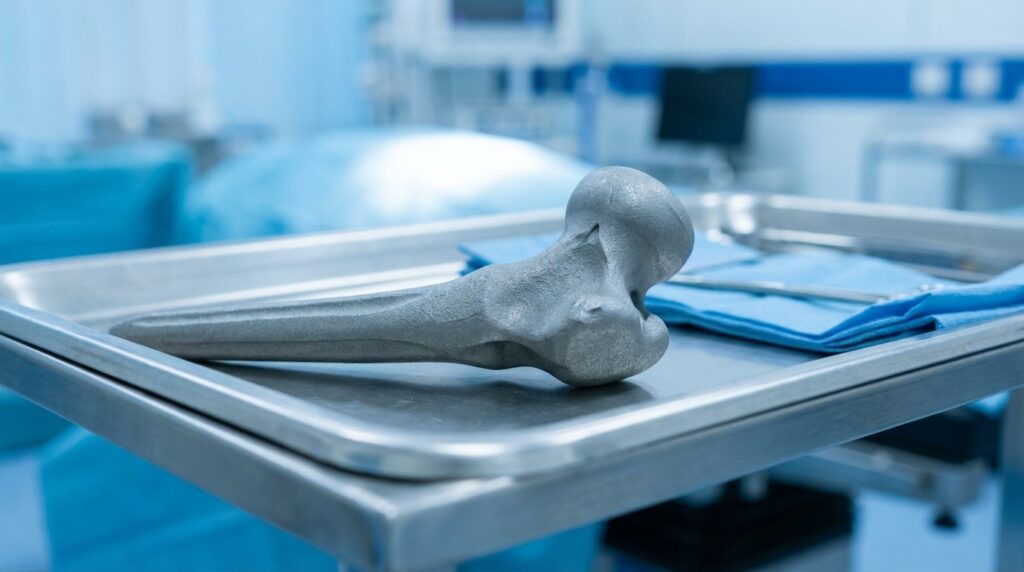
骨科植入物是精密的醫療裝置,用來取代、支撐或修復人體中受損的骨頭和關節。由於它們必須長期或永久地留在人體內,因此主要是由高生物相容性的材料製成,例如鈦合金 (Ti-6Al-4V) 或鈷-鉻-鉬合金 (CoCrMo)。.
骨科植入物的應用場景
骨科植入物廣泛應用於各種關節置換、脊椎修復及創傷骨折固定手術。不同的應用領域對表面處理的要求大不相同,有時甚至相互矛盾:
- 人工膝關節和髖關節(關節表面):這些是骨骼銜接的摩擦承載區。這些區域需要極致的鏡面拋光 (Ra < 0.05μm),以減少金屬磨耗碎屑並防止植體鬆脫。.
- 植體柄和非關節表面:這些零件需要與骨組織緊密結合(骨結合),通常需要保留或製造特定的粗糙質地(例如多孔塗層或噴砂處理)。.
這就要求拋光設備不僅要達到極高的光澤度,還必須具備以下條件 精確的局部拋光控制, ensuring that areas meant to remain rough are left untouched. For a closer look at the mirror-finishing of spherical bearing surfaces such as femoral heads, see our dedicated article on artificial joint implant robotic polishing.
骨科植入物的結構特性
骨科植入物的結構極為複雜:
- 複雜的仿生自由曲線:完全模仿人類的骨骼形態,包含許多不規則的突起、凹槽和微小的過渡弧度,幾乎沒有標準的幾何形狀。.
- 嚴格的輪廓公差:人工接頭的接觸面必須完全匹配。微米級的形狀誤差會導致應力分佈不均和加速磨損。.
- 難加工材料特性:鈦合金具有高硬度和極差的熱傳導性。在研磨和拋光過程中,它們會迅速產生強烈的熱量,導致表面燒焦、氧化變色或微觀結構改變。.
骨科植入物的主要特性
主要特性:
- 醫療級表面粗糙度:關節摩擦面必須達到 Ra < 0.05μm 的超鏡面。.
- 微米級形狀保真度:拋光過程絕對不能破壞 CNC 精密加工的仿生輪廓。.
- Full Quality Traceability and Consistency: Implant manufacturers operate under strict quality systems. The machining process for every implant must be stable and repeatable, with scrap controlled through process design rather than sorted out at final inspection.
種植體研磨技術參數
| 項目 | 參數範圍 | 注意事項 |
| 工具標記混合 | 彈性皮帶 / 尼龍輪 | 輕輕去除 CNC 加工留下的微小痕跡 |
| 精細研磨速度 | 1500 - 3000 rpm | 使用特定的醫療級複合材料和小布輪 |
| 觸點公差 | < 0.01 mm | 依賴高頻主動力控制系統 |
| 最終表面粗糙度 | Ra 0.02 - 0.05 μm | Typical target range for CoCrMo and Ti-6Al-4V bearing surfaces, per customer drawing |
| 生產環境 | ISO 7 級或 8 級無塵室 | 嚴格控制灰塵和交叉污染 |
為什麼機械手臂拋光是骨科植入物的首選?
傳統手工拋光的痛點
在加工鈦金屬人工關節等高精度植入物時,傳統的手工拋光面臨著難以克服的瓶頸:
| 痛點 | 特定問題 | 影響 |
| 輪廓變形的嚴重風險 | 鈦金屬很難拋光。工人經常為了提高效率而過度用力。. | 因尺寸誤差導致高價鈦零件報廢;良率勉強超過 85%。. |
| 頻繁熱灼傷 | 鈦的導熱性很差。稍長時間的手工拋光會造成局部高溫。. | 導致表面氧化變色,甚至改變疲勞強度,造成嚴重的醫療風險。. |
| 無法到達微小死角 | 人工關節有微小的過渡溝槽。手動輪無法精確進入。. | 留下未經拋光的黑斑,無法通過嚴格的醫療品質檢驗。. |
機器人自動化的優勢
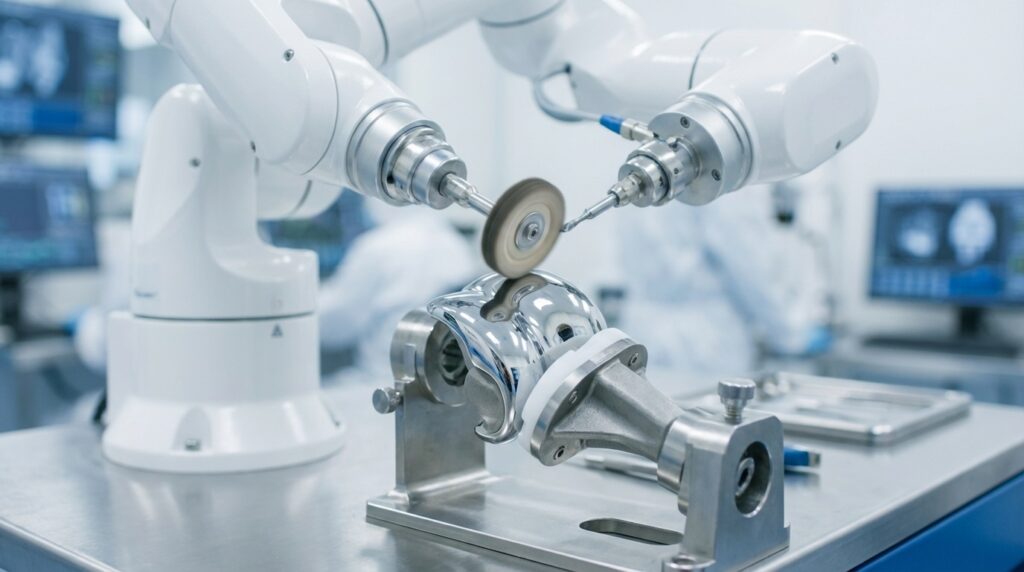
Medical-grade robotic polishing cells (combining high-precision vision with micro-feed force control) offer a practical way to break through titanium polishing bottlenecks:
| 比較尺寸 | 手動拋光 | 機器人拋光 | 改進 |
| 輪廓保真度 | 依賴工人的感覺,誤差高 | Follows bionic curves with constant contact force | Consistent contour accuracy from batch to batch |
| 熱損壞 | 頻繁 | 恆壓/恆速,無熱積聚 | Largely prevents titanium surface burning |
| 產品一致性 | 批次間差異大 | 微米級重複性 | Process data logging supports customer quality audits |
| 耗材與環境 | 嚴重的拋光粉塵污染 | 具備 MQL 的封閉式單元 | Compatible with cleanroom production environments |
核心優勢:
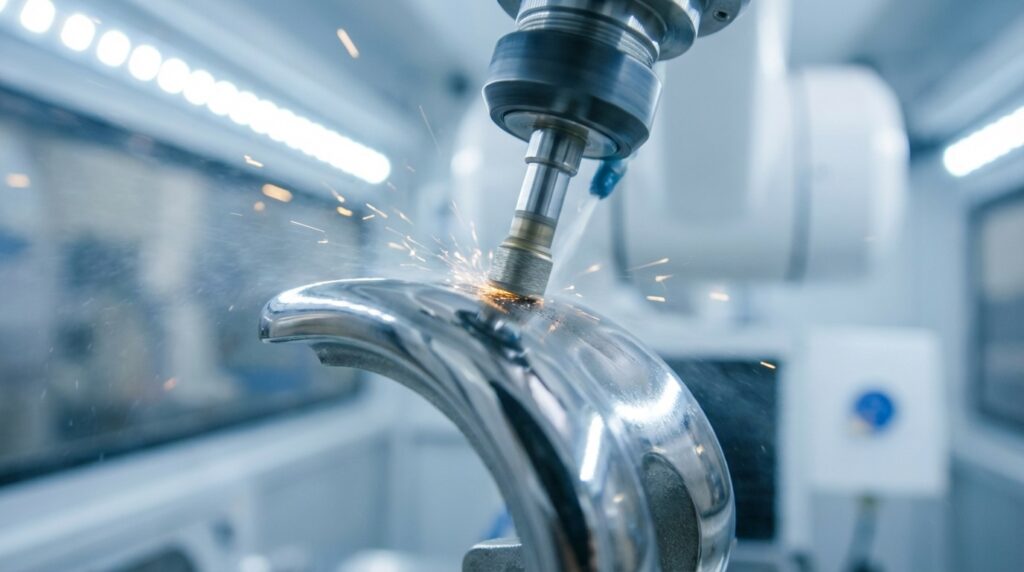
- 主動式順應力控制: This is the core of processing orthopedic implants, and the same technology that distinguishes modern robotic polishing machines from rigid automation. The robot spindle is equipped with an ultra-sensitive 6-axis force sensor, allowing it to softly conform to the joint’s curves with extremely light, constant pressure (e.g., 2-5N), achieving “removing tool marks without harming the contour.”
- 精密局部處理配備多工位自動工具切換器 (ATC),機器人可根據曲線變化,自動切換成直徑極小的拋光毛邊,以穿透並加工人工骨盆或膝關節的複雜盲區。.
- 低溫冷切割策略:透過精確控制機器人的進給速度和微噴霧拋光液,有效地散去鈦金屬表面的切削熱,防止金相結構的任何改變。.
自動化拋光製程工作流程
此程序使用 8 個步驟 來完成鈦金屬人工膝關節的表面處理。由於前面的 CNC 加工精度已經很高,拋光的主要目的是 消除微小的工具痕跡,達到極致的鏡面效果. .......。 核心製程為 02-04 步驟中的多段微力研磨與拋光。.
骨科植入物拋光完整製程流程
| 製程 | 製程名稱 | 設備 | 消耗品 | 時間 | 精度/用途 |
| 01 | 非破壞性裝載 | 柔性夾具 + 機器人 | 聚氨酯保護器 | 15s | 確保重複定位時不會刮傷 |
| 02 | 靈活混合 | 機器人 + 力控制主軸 | 細尼龍/羊毛輪 | 90s | 消除 5 軸 CNC 的微米級標記 |
| 03 | 盲區微拋光 | 機器人 + 高速主軸 | 安裝式微型毛邊 | 75s | 處理複雜的轉換,例如股骨髁 |
| 04 | 鏡面磨光 | 機器人 + 拋光機 | 柔軟棉布 + 醫用複合物 | 120s | 達到極致鏡面效果 Ra < 0.05μm |
| 05 | 淨化清洗 | 多槽超聲波產線 | 醫療級溶劑 | 300s | 徹底清除化合物殘留物和微顆粒 |
| 06 | DI 水沖洗 | 高壓噴灑機艙 | 去離子 (DI) 水 | 60s | 確保表面沒有離子殘留物 |
| 07 | 無塵室乾燥 | 真空乾燥爐 | - | 120s | 在無塵環境中快速乾燥 |
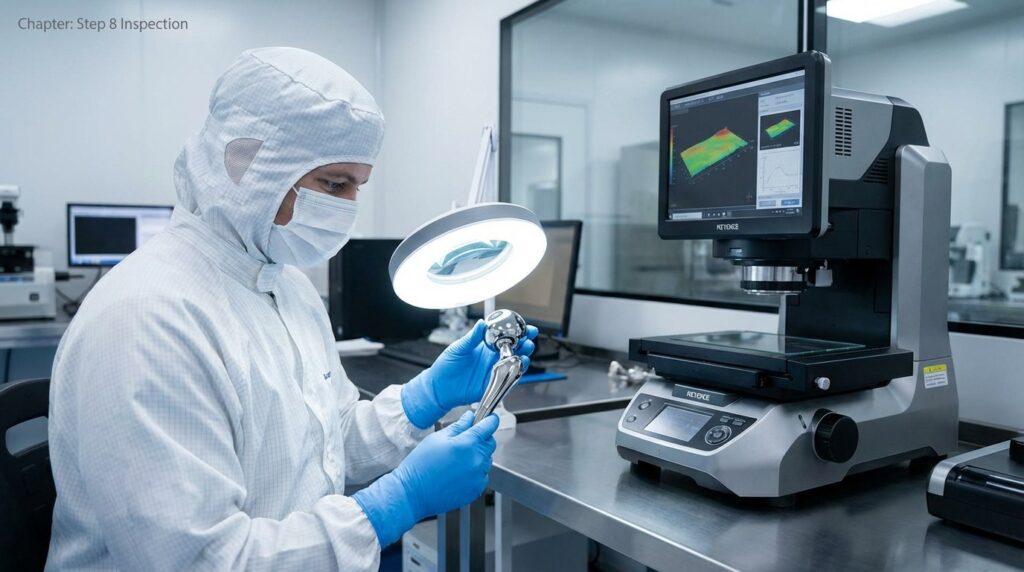
| 08 | 醫療級檢驗 | 3D 光學輪廓儀 | - | 45s | 量測表面粗糙度與幾何公差 |
骨科植入物拋光製程說明
步驟 1:非破壞性載入
目的:牢牢抓住種植體,不會損壞已加工的粗糙表面(專為骨整合而設計)。.
重點:夾具必須以醫療級聚氨酯或鐵氟龍包覆,以防止金屬夾具在鈦金屬表面留下壓痕。.
步驟 2:靈活混合
目的:溫和地消除 5 軸 CNC 銑削留下的微細網狀刀痕,為鏡面拋光奠定基礎。.
重點:必須啟動力控制模式。機器人以極輕的接觸力 (2-5N) 在關節表面均勻滑行,以防止產生任何切割階梯。.
步驟 3:盲區微拋光
目的:加工大型拋光輪無法達到的複雜凹形曲線(如膝關節的髁間凹槽)。.
重點:機器人可自動更換安裝好的毛邊,直徑可能只有 10mm-20mm,在狹窄的空間中執行高速、最小壓力的精細研磨。.
步驟 4:鏡面打磨
目的:將摩擦關節表面拋光至超鏡面,以減少植入人體後的磨損。.
重點:使用極為柔軟的棉質拋光輪,結合專業、生物相容的醫療級拋光液。整個製程嚴格控制溫度,避免表面灼傷。.
步驟 5:淨化清洗
目的:醫療裝置對微粒殘留物的容忍度為零。超聲波清洗必須徹底剝離隱藏在微孔深處的拋光液和鈦粉。.
步驟 6:去離子水沖洗
目的:使用高純度去離子水清洗溶劑,確保植體表面的生物清潔度。.
步驟 7:無塵室乾燥
目的:在真空或高效微粒空氣 (HEPA) 過濾的環境中徹底乾燥濕氣,以防止二次污染。.
步驟 8:醫療級檢驗
目的:使用非接觸式 3D 光學輪廓儀等高端設備生成完整的表面粗糙度和 3D 尺寸檢測報告,實現每件产品的品質可追溯性。.
加工挑戰與解決方案
挑戰 1:鈦極易受熱燃燒和變形影響
問題:
- 鈦合金的熱傳導率極低。拋光過程中產生的熱量無法快速散去,而會集中在接觸面。.
- 過高的溫度不僅會造成表面氧化變藍(嚴重的外觀缺陷),還會釋放薄壁結構的內應力,造成微變形,破壞組裝精度。.
解決方案:
- 介紹冷柔性磨削策略和最小量潤滑 (MQL). These are the same thermal-management principles covered in our general robotic grinding guide, applied here with tighter limits.
- 機器人拋光程式嚴禁長時間停留在同一區域。採用「小切削深度、高頻率、快進給」的刀具路徑策略。同時,精確噴灑的霧化冷卻液/拋光液可將接觸點溫度嚴格控制在材料相變臨界值以下。.
- 結果: Scrap caused by localized overheating is largely eliminated, and metallographic inspection of finished surfaces consistently confirms an undisturbed base structure.
挑戰 2:拋光死角的工具可觸及性極差
問題:
- 骨科植入物(如人工骨盆部件)有許多微小的弧度和深溝,標準拋光輪根本無法進入。.
解決方案:
- 多工位協同工作及自動換刀 (ATC).
- 該單元配備了各種尺寸和形狀的拋光工具。透過離線程式設計 (OLP) 軟體的精確模擬,機器人就像牙醫一樣,可以自動拾取超細球頭或圓錐形毛邊,並以特定角度伸入盲區進行精細加工。.
- 結果: Full-surface polishing coverage with no dead zones, helping finished parts meet strict visual inspection requirements.
Application Scenario
Production Background
A typical application for this type of cell is the finishing line of an orthopedic implant manufacturer producing artificial hip and knee components. The workpiece in this scenario is the CoCrMo femoral component of a knee joint—a small, highly curved part where the articular surface must be brought to a mirror finish while the surrounding geometry stays untouched.
技術挑戰
- 人工膝關節的股骨髁組件是由極難加工的鈷-鉻-鉬 (CoCrMo) 合金製成,具有高度複雜的曲線。.
- The drawing calls for a mirror finish in the Ra 0.02 μm class on the articular surface, with geometric contour deviations held within a few microns.
- The finishing process needs complete data recording and traceability to support the manufacturer’s quality audits and process validation documentation.
解決方案
| 項目 | 組態 |
| 工件 | 鉻鉬合金人工膝關節(股骨髁) |
| 材質 | 鉻鉬合金 |
| 設備 | Medical-Grade 6-Axis Robot + 6D Force Control + Cleanroom-Compatible Enclosure |
| 核心技術 | 高頻主動力控制 + OLP + 全製程資料監控 |
| 製程 | 靈活混合 -> 盲區微磨 -> 軟布鏡面上光 |
| 週期時間 | Several minutes per piece at high precision |
實施結果
- Precision Performance: With the high-precision force control system, contour deviations are held within a few microns of the CAD model, and surface roughness stabilizes in the Ra 0.02-0.05 μm range, meeting the drawing requirements.
- Process Traceability: The system records the underlying parameters—pressure, speed, coordinates—for every joint machined. This documented process evidence supports the manufacturer’s quality audits and process validation activities.
- 清潔生產: The cell integrates high-level dust filtration and micro-negative pressure systems, making it compatible with ISO Class 7/8 cleanroom surroundings and reducing cross-contamination risks.
常見問題
Q1: 機器人拋光能否真正保證不破壞 CNC 銑出來的高精度輪廓?
A: Yes, when an active force control system is used. If a traditional rigid robot deviates by 0.1mm, it severely gouges the workpiece. However, a robot equipped with a force sensor acts like a spring; even if it encounters a 0.5mm or 1mm curve error, it automatically yields, always maintaining a constant, gentle pressure of, say, 3N. This “soft contact” removes the micron-level roughness peaks and valleys without altering the macroscopic geometric contour.
Q2: 對於低產量、高混合度的骨科植入物 (如客製化關節),是否容易更換機器人?
A:非常容易。骨科植入物確實有許多規格。我們的解決方案深度整合了 OLP(離線程式設計)軟體。當引入新的關節規格時,工程師只需將 3D 模型匯入軟體,軟體便會自動產生平滑的拋光路徑,並執行幹涉檢查。在車間,操作人員只需載入相應的程式並更換快速夾具。整個更換過程通常不超過 10 分鐘。.
Q3: 拋光過程中產生的鈦粉塵有爆炸的危險。系統如何防止這種情況發生?
A: Titanium and aluminum dust fires are a serious, well-documented hazard, and the cell is engineered around it. Our medical-grade polishing cells come standard with a high level of safety protection: ATEX-rated explosion-proof dust extraction, wet-type vacuum designs that rapidly cool and settle the dust, and MQL spray measures within the fully enclosed cell, so the polishing process can be operated safely within a documented fire-protection concept.
Q4: 與一般硬體產業相比,醫療器材拋光的 ROI(投資報酬率)如何?
A: While the initial investment for a customized force-controlled robotic cell for medical devices is higher than standard polishing equipment, the payback is often faster than in general hardware polishing. The reason is simple: implant workpieces carry a high unit value and a very low tolerance for scrap. A system that cuts the scrap rate of titanium joints by even a few percentage points typically recovers its investment in one to two years, in addition to the savings in high-skilled labor costs.
總結
鈦骨科植入物的表面處理使用了一種 具有微米級主動力控制功能的自動化機器人拋光系統 is a proven route to meeting the precision, traceability, and process-validation requirements of modern implant manufacturing. It addresses the contour distortion and thermal damage issues typical of manual grinding, and it raises the quality ceiling of scalable medical product manufacturing.
If you are seeking to improve the polishing yield of artificial joints, solve complex curve machining challenges, or wish to strengthen the process documentation behind your finishing line, 聯絡 我們的先進製造工程團隊提供專業的專案評估和概念驗證測試服務。.