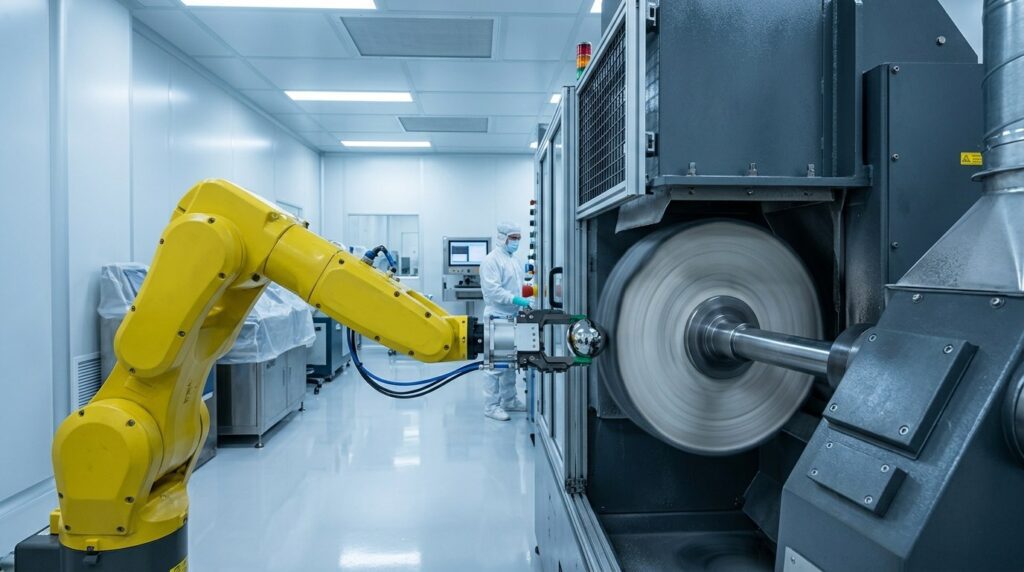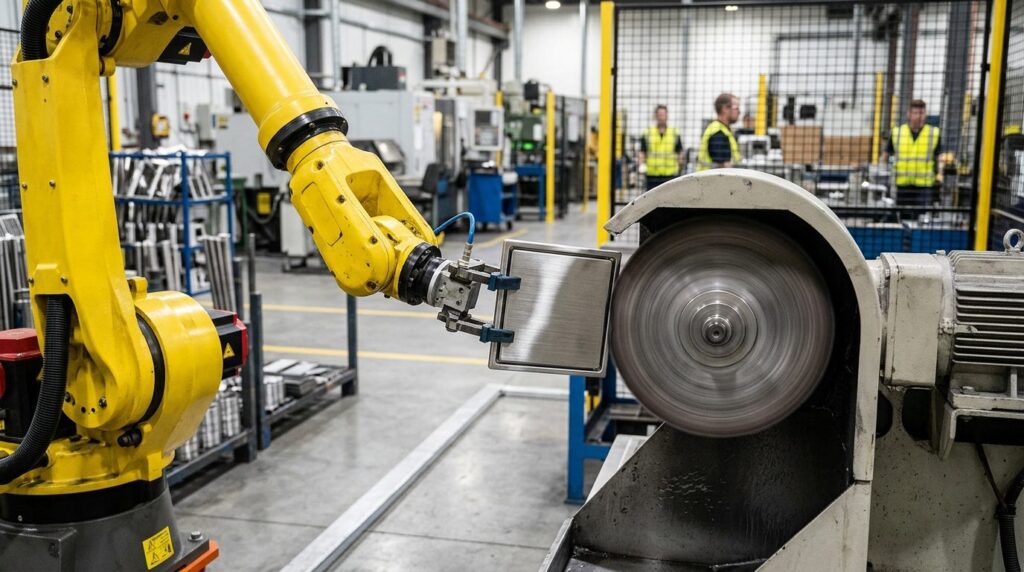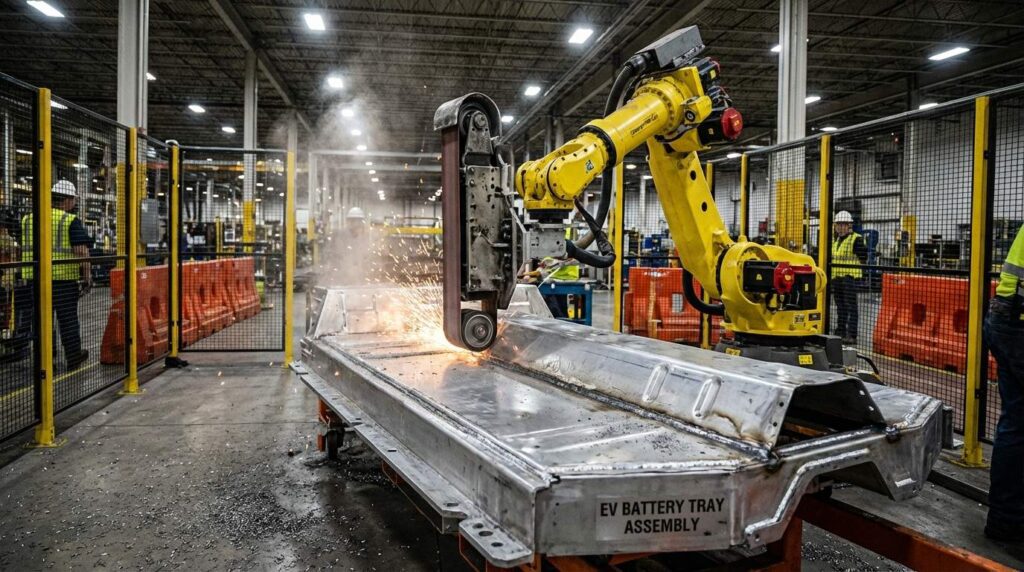
The weld seam flatness on a Battery Enclosure (or Tray) directly dictates the adhesion of the top cover sealing gel, which is the absolute lifeline for ensuring the IP68 waterproof rating of an Electric Vehicle (EV) battery pack. Written for production teams in the automotive and EV manufacturing sector, this article analyzes the automated flush grinding technology for long weld seams on massive aluminum alloy battery trays. We explore the fatal defects of manual grinding that lead to leakages and scrap, and demonstrate how robotic active force control and laser seam tracking systems collaborate perfectly to achieve absolute flushness over meters of weld seams, completely eliminating safety hazards and production bottlenecks.
Khay pin xe điện là gì?
Khung chứa pin (hay vỏ bảo vệ) của xe điện là thành phần kết cấu cốt lõi của khung gầm xe, được thiết kế để chứa và bảo vệ các mô-đun pin đắt tiền cùng hệ thống làm mát bằng chất lỏng. Nhằm đạt được mức giảm trọng lượng tối đa, các khung chứa pin hiện đại thường được chế tạo bằng cách ghép nối các thanh nhôm đùn.
Các tình huống ứng dụng của khay pin xe điện
Do những hạn chế về kích thước của các thanh nhôm đùn, một khay pin hoàn chỉnh (thường có kích thước dài 2 mét và rộng 1,5 mét) phải được ghép lại từ nhiều thanh nhôm khác nhau bằng phương pháp hàn ma sát khuấy (FSW), hàn MIG hoặc hàn laser.
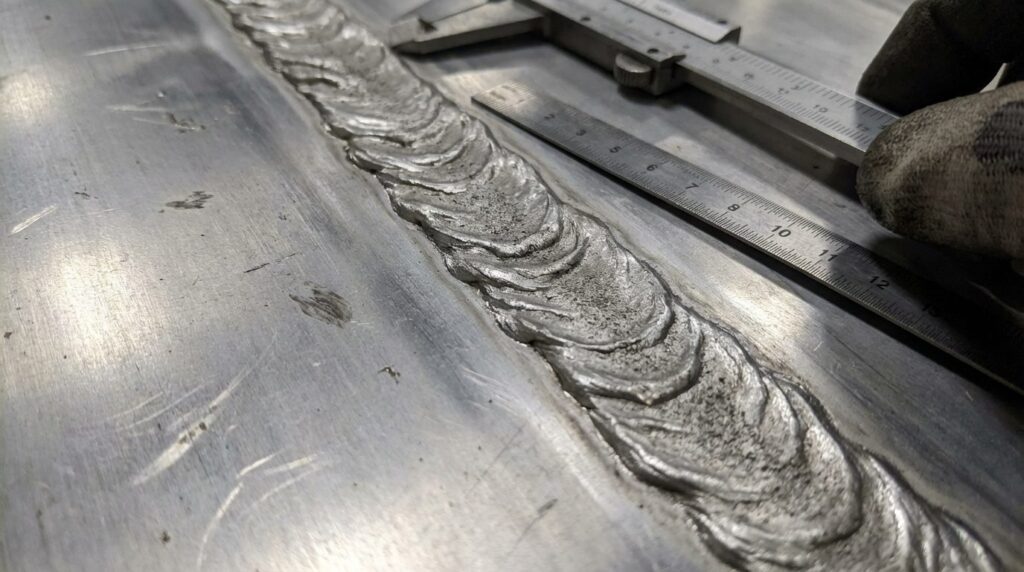
Sau khi hàn, phần viền trên của khay (bề mặt tiếp xúc với nắp) và các khu vực tấm làm mát bằng chất lỏng ở đáy còn lại nhiều đường hàn có độ dài khác nhau, nhô lên đáng kể so với bề mặt kim loại nền. Các đường hàn nhô cao này phải được “làm phẳng” một cách kỹ lưỡng; nếu không, các công đoạn bôi keo và hàn kín tự động tiếp theo sẽ không thành công.
Đặc điểm cấu trúc của khay chứa pin xe điện
Việc gia công khay pin đặt ra những thách thức kỹ thuật cực kỳ lớn:
- Đường may siêu dài và không đều: Tổng chiều dài đường hàn kín dọc theo chu vi thường vượt quá 6 đến 8 mét, bao gồm nhiều góc 90 độ.
- Nhôm thành mỏng dễ bị biến dạng: Độ dày thành của các thanh nhôm thường chỉ từ 2–4 mm. Nếu quá nhiệt trong quá trình mài, toàn bộ khung xe có thể dễ dàng bị cong vênh.
- Dung sai kích thước do biến dạng hàn: Các tấm kim loại cỡ lớn bị biến dạng do ứng suất nhiệt sau khi hàn, khiến vị trí thực tế của các đường hàn lệch so với bản vẽ CAD 3D vài milimet hoặc thậm chí vài centimet.
Các đặc điểm chính của quá trình mài khay pin
Các đặc điểm chính:
- Độ phẳng tuyệt đối: Đường hàn nền phải đạt được bề mặt phẳng hoàn toàn, không có độ chênh lệch so với vật liệu nền nhôm liền kề. Không được có bất kỳ phần nhô ra nào, và tuyệt đối cấm “cắt quá mức” (gây xước vào vật liệu nền).
- Khả năng cách nhiệt cực cao: Bề mặt phải hoàn toàn phẳng để đảm bảo miếng đệm kín được nén chặt hoàn hảo, đáp ứng các yêu cầu nghiêm ngặt của bài kiểm tra chống bụi và chống nước theo tiêu chuẩn IP68 (ngâm nước) đối với bộ pin.
- Phòng ngừa các vết nứt nhỏ: Lực mài phải đồng đều để tránh hiện tượng tập trung ứng suất và các vết nứt vi mô trong vùng chịu ảnh hưởng nhiệt (HAZ) của mối hàn.
Thông số kỹ thuật cho quá trình hàn ghép
| Mặt hàng | Phạm vi tham số | Ghi chú |
| Loại bỏ vết mài thô | Chiều cao hạt: 1,5 mm – 3,0 mm | Chủ yếu dành cho các mối hàn FSW hoặc MIG |
| Lực ma sát khi mài | 30N – 80N (Thích ứng động) | Được duy trì bởi trục điều khiển lực chủ động chịu tải nặng |
| Độ phẳng bề mặt cuối cùng | < 0,1 mm / 100 mm | Đáp ứng các yêu cầu nghiêm ngặt về việc thi công keo dán |
| Độ nhám bề mặt | Ra 3,2 – 6,3 μm | Đảm bảo độ bám dính đủ cho keo kết cấu |
| Độ chính xác theo dõi quỹ đạo | ± 0,2 mm | Dựa trên hệ thống theo dõi hình ảnh bằng laser 3D |
Tại sao phương pháp mài bằng robot lại được ưa chuộng trong sản xuất khay pin?
Những khó khăn khi mài thủ công truyền thống
Việc phụ thuộc vào công nhân cầm máy mài góc cầm tay để gia công những khay khổng lồ nặng hơn 100 kg và có hàng mét đường hàn là một thảm họa:
| Vấn đề nan giải | Vấn đề cụ thể | Tác động |
| Tỷ lệ phế liệu do “cắt quá mức” gây ra thảm họa | Khi công nhân mệt mỏi, họ dễ dàng ấn máy mài quá mạnh vào tấm nhôm mỏng, khiến kim loại nền bị lõm sâu. | Một “vết lõm” làm mất khả năng bịt kín. Những khay trị giá hàng nghìn đô la lập tức trở thành phế liệu. |
| Thiếu hiệu quả và không ổn định | Việc mài liên tục hàng mét đường hàn rất mệt mỏi; một công nhân mỗi ngày chỉ có thể xử lý được vài khay. | Trở thành “điểm nghẽn” nghiêm trọng nhất trên toàn bộ dây chuyền lắp ráp ô tô. |
| Nguy cơ nổ bụi nhôm và các rủi ro đối với sức khỏe | Việc mài thủ công khiến xưởng làm việc ngập tràn bụi nhôm có tính nổ cao, đồng thời gây ra những rủi ro nghiêm trọng về sức khỏe nghề nghiệp. | Đối mặt với nguy cơ phải ngừng hoạt động do các vấn đề môi trường nghiêm trọng và các yêu cầu bồi thường cho người lao động với số tiền khổng lồ. |
Những lợi ích của tự động hóa bằng robot
Hệ thống mài tự động bằng robot (equipped with heavy-duty linear tracks or positioners) are currently the standard configuration for automotive OEMs and Tier 1 die-casters to solve battery tray delivery challenges—for equipment selection background, see our robotic grinding guide:
| Tiêu chí so sánh | Mài thủ công | Mài bằng robot | Sự cải thiện |
| Kiểm soát độ phẳng | Uneven, frequent scrap | Consistently flush | Grinding-related leakage complaints largely disappear |
| Hiệu quả gia công | Phải làm thủ công nhiều, rất chậm | Cắt tốc độ cao liên tục 24/7 | Capacity tracks the auto line takt |
| Tuổi thọ của vật tư tiêu hao | Giấy nhám mòn nhanh và không đều | Tự động đo chiều dài và bù lực | Abrasive spend per part falls |
| An toàn & Tuân thủ | Môi trường có nguy cơ cao và ô nhiễm | Hệ thống thu gom bụi ướt, hoàn toàn kín | Đáp ứng các tiêu chuẩn ATEX/chống cháy nổ nghiêm ngặt nhất trên thế giới |
Những lợi thế cốt lõi:
- Mài xả hoạt động: Khác với phương pháp điều khiển vị trí cứng nhắc truyền thống, trục chính điều khiển lực của robot hoạt động như một hệ thống treo chủ động. Dù mối hàn cứng đến đâu hay bề mặt khay gồ ghề thế nào, đai mài vẫn luôn cắt với lực đẩy cố định đã được cài đặt sẵn. Nó chỉ mài bớt phần mối hàn nhô ra; ngay khi chạm vào kim loại nền, nó sẽ trượt qua, ngăn chặn hoàn toàn tình trạng cắt quá mức.
- Theo dõi đường hàn bằng laser: Sử dụng máy quét tia laser gắn phía trước, robot quét đường viền 3D thực tế và độ lệch của đường hàn chỉ vài mili giây trước khi mài. Robot tính toán lại đường chạy dao theo thời gian thực, từ đó khắc phục hoàn toàn các sai số kích thước do biến dạng nhiệt nghiêm trọng của các chi tiết nhôm gây ra.
Quy trình làm việc của quy trình hàn ghép tự động
Flush-grinding the top sealing seams of a large battery tray breaks into eight steps, the heart of which is the vision-guided, constant-force cutting of steps 02-04.
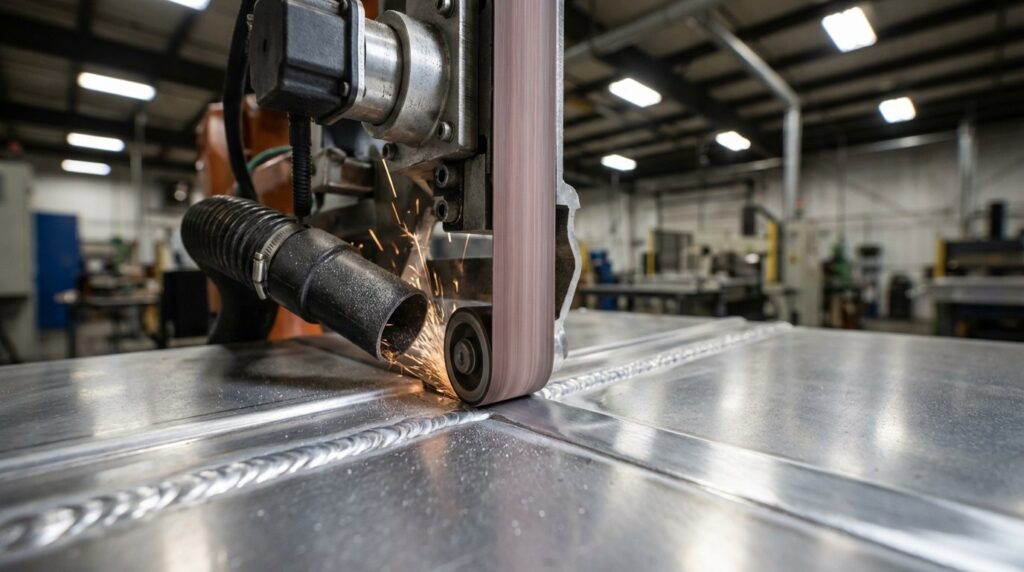
Quy trình mài hoàn chỉnh cho khay pin
| Quy trình | Tên quy trình | Thiết bị | Vật tư tiêu hao | Thời gian | Độ chính xác / Mục đích |
| 01 | Tự động nạp/dỡ | Cần trục / Thiết bị định vị cỡ lớn | – | 45 giây | Nhanh chóng cố định các chi tiết gia công cỡ lớn có chiều dài 2 mét |
| 02 | Quét và theo dõi bằng laser | Cảm biến laser quét 3D | – | 30 tuổi | Điều chỉnh bù sai lệch do biến dạng mối hàn theo thời gian thực |
| 03 | Mài phẳng mạnh | Máy chà nhám đai Robot + Heavy Force | Dây đai gốm thô | những năm 180 | Nhanh chóng mài phẳng các đường hàn cao chót vót cho bằng phẳng với bề mặt kim loại nền |
| 04 | Hiệu ứng chuyển tiếp | Robot + Đĩa mài / Miếng mài nylon | Đĩa mài có cánh với hạt mịn | 120 giây | Loại bỏ các vết xước do mài thô, tạo ra bề mặt đồng đều |
| 05 | Hệ thống hút bụi ướt | Máy lọc khí ướt ATEX (Máy hút) | Nước / Chất khử bọt | Tiếp theo. | Ngăn ngừa sự tích tụ bụi nhôm dễ cháy nổ |
| 06 | Luồng khí áp suất cao | Vòi phun khí ở đầu cánh tay | Khí nén | những năm 40 | Dùng khí nén thổi sạch các mảnh kim loại còn sót lại trên bề mặt |
| 07 | Kiểm tra độ phẳng trong dây chuyền. | Cảm biến khoảng cách laser | – | 45 giây | Xác nhận độ lệch chiều cao mối hàn nhỏ hơn 0,1 mm |
| 08 | Chuẩn bị cho bài kiểm tra rò rỉ | Chuyển đến Trạm kiểm tra rò rỉ | – | 30 tuổi | Chuẩn bị cho các thử nghiệm suy giảm áp suất khí heli/không khí tiếp theo |
Mô tả quy trình mài khay pin
Bước 1: Tự động nạp/dỡ hàng
Mục đích: Gắn chặt khay nhôm cồng kềnh vào bệ xử lý.
Những điểm chính: Do kích thước khổng lồ, hệ thống này thường sử dụng bộ định vị xoay-nghiêng hai trục, hoặc một robot xử lý kết hợp với robot mài, giúp thực hiện các thao tác luân phiên liên tục.
Bước 2: Quét và theo dõi bằng laser
Mục đích: Giải quyết sự chênh lệch giữa “tọa độ bản vẽ CAD” và “tọa độ thực tế”.
Những điểm chính: Một tia laser được lắp đặt phía trước dụng cụ mài sẽ quét nhanh dọc theo đường hàn, từ đó xác định tọa độ về chiều cao thực tế và độ lệch của đường hàn. Thuật toán của hệ thống sẽ ngay lập tức tái tạo lại đường mài.
Bước 3: Mài xả mạnh
Mục đích: Quy trình “cắt đỉnh” cốt lõi.
Những điểm chính: Máy chà nhám băng điều khiển lực hoạt động ở công suất tối đa, nhanh chóng mài phẳng đường hàn nhô cao 2–3 mm xuống mức bằng phẳng với bề mặt. Cảm biến lực đảm bảo rằng ngay khi đường hàn đã bằng phẳng, áp lực lên vật liệu nền sẽ giảm ngay lập tức, giúp tránh hình thành các vết lõm.
Bước 4: Pha trộn chuyển tiếp
Mục đích: Làm đồng nhất kết cấu bề mặt.
Những điểm chính: Không chỉ cần bề mặt phẳng mà còn phải có độ nhám đồng đều. Robot sử dụng đĩa mài dạng cánh dọc theo đường đi để thực hiện quá trình làm mịn thứ cấp, tạo ra một “bề mặt kết dính” lý tưởng cho chất trám.
Bước 5: Hút bụi ướt
Mục đích: Việc cắt một lượng lớn nhôm sẽ tạo ra bụi cực kỳ nguy hiểm và dễ cháy. Bụi này phải được hút ngay lập tức tại điểm cắt bằng áp suất âm mạnh vào một thiết bị thu gom bụi chống cháy nổ có bể nước (Wet Scrubber).
Bước 6: Thổi khí áp suất cao
Mục đích: Vệ sinh khu vực làm việc để ngăn cản cặn bẩn xâm nhập vào trạm phun keo ở phía sau, nơi rất nhạy cảm với bụi.
Bước 7: Kiểm tra độ phẳng trên dây chuyền
Mục đích: Loại bỏ việc đo bằng thước đo độ phẳng thủ công. Hệ thống sử dụng tia laser để quét lại bề mặt sàn, từ đó tự động xác định xem độ phẳng tuyệt đối có đáp ứng các yêu cầu hay không.
Bước 8: Chuẩn bị kiểm tra rò rỉ
Mục đích: Các khay đã qua kiểm tra được chuyển đến buồng thử nghiệm kín để tiến hành kiểm tra rò rỉ bằng phương pháp chênh lệch áp suất heli hoặc không khí với tiêu chuẩn cực kỳ nghiêm ngặt.
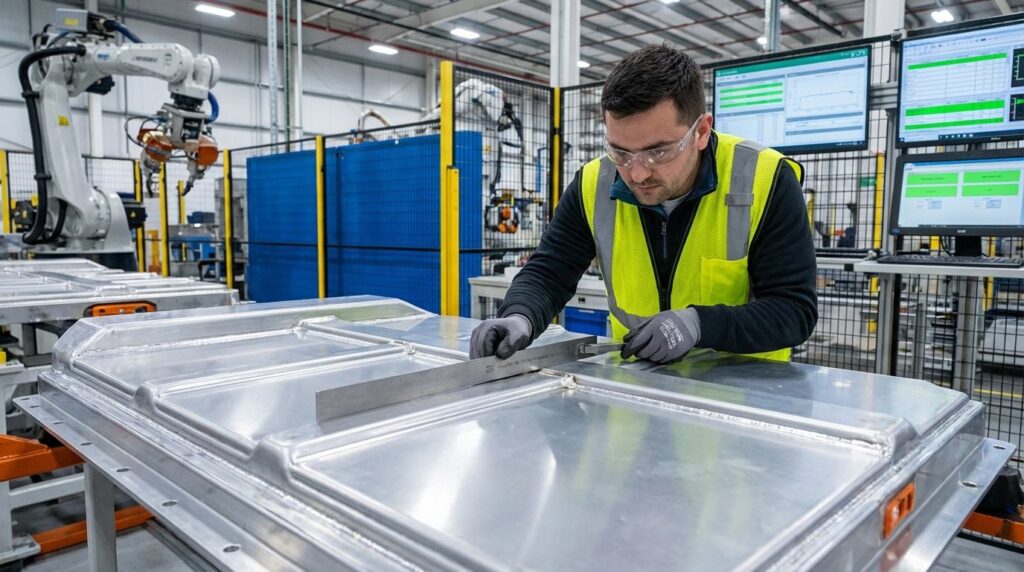
Những thách thức và giải pháp trong gia công
Thách thức 1: Robot “bỏ sót” điểm hàn do biến dạng nghiêm trọng của chi tiết
Vấn đề:
- Sau khi trải qua quá trình hàn ở nhiệt độ cao, khung tổng thể của một khay nhôm thành mỏng dài 2 mét không tránh khỏi bị cong vênh và xoắn.
- Nếu robot tuân thủ cứng nhắc lộ trình đã được lập trình sẵn, nó thường sẽ chỉ mài qua không khí ở một đoạn trong khi lại mài sâu vào lớp kim loại nền ở đoạn khác.
Giải pháp:
- Giới thiệu công nghệ 3D Vision và công nghệ theo dõi đường hàn bằng laser.
- Robot không còn mài “mù quáng” nữa. Trước mỗi lần di chuyển, hệ thống thị giác sẽ thu thập dữ liệu về hình dạng biến dạng thực tế của khay, đồng thời truyền dữ liệu sai lệch 3D về bộ điều khiển robot theo thời gian thực.
- Kết quả: Hoàn toàn bỏ qua các sai số do kẹp giữ và biến dạng nhiệt do hàn, đảm bảo vật liệu mài luôn được định tâm chính xác 100% trên đường hàn.
Thách thức 2: Các yêu cầu an toàn chống cháy nổ cực kỳ nghiêm ngặt đối với bụi nhôm
Vấn đề:
- Quá trình mài nhôm ở tốc độ cao tạo ra bụi nhôm mịn. Nếu nồng độ bụi này trong không khí đạt đến một mức nhất định, chỉ cần một tia lửa tĩnh điện nhỏ nhất cũng có thể gây ra một vụ nổ thảm khốc. Các nhà máy ở châu Âu và Mỹ áp dụng các tiêu chuẩn an toàn và môi trường cực kỳ nghiêm ngặt (ATEX / NFPA) liên quan đến vấn đề này.
Giải pháp:
- Thiết kế buồng nghiền kín hoàn toàn, chống cháy nổ.
- Sử dụng hệ thống thu bụi ướt (hút bột nhôm trực tiếp vào nước để tạo lớp thụ động và lắng đọng).
- Khu vực này sử dụng động cơ chống cháy nổ, sàn chống tĩnh điện, đồng thời được trang bị hệ thống giám sát và báo động nồng độ bụi trực tuyến cùng cửa xả áp tự động.
- Kết quả: Xóa tan mọi lo ngại của các khách hàng là các tập đoàn ô tô đa quốc gia về an toàn cơ sở, đồng thời dễ dàng vượt qua các cuộc kiểm toán EHS khắt khe nhất.
Application Scenario
Project Profile
Project profile: a Tier 1 EV chassis component supplier in North America, serving a pure-EV OEM whose battery packs demand strict IP68 airtightness and aggressive lightweighting.
Những thách thức kỹ thuật
- Khay pin thế hệ mới của khách hàng sử dụng các thanh nhôm đùn cường độ cao thuộc dòng 7, được nối với nhau bằng phương pháp hàn ma sát khuấy (FSW).
- The FSW seams are extremely hard and total roughly 8 meters in length. A manual line staffed across three shifts could not hold flatness, and over-cut scrap ran at double-digit rates.
- Năng lực sản xuất đã tụt hậu nghiêm trọng so với nhu cầu của các nhà sản xuất thiết bị gốc (OEM).
Giải pháp
| Mặt hàng | Cấu hình |
| Chi tiết gia công | Khung đỡ pin bằng nhôm dành cho xe điện thuần túy |
| Kích thước/Trọng lượng | 2,1 m × 1,4 m, khoảng 85 kg |
| Thiết bị | 2 robot 6 trục công suất lớn trên đường ray tuyến tính trục thứ 7 + 2 bộ định vị nghiêng |
| Công nghệ cốt lõi | Quét cấu hình bằng laser + Điều khiển lực chủ động linh hoạt |
| Quy trình | Dây chuyền laser -> Mài phẳng băng tải nặng -> Hệ thống hút bụi ướt ATEX -> Kiểm tra liên tục |
| Thời gian chu kỳ | 6,5 phút / Toàn bộ đường hàn dài 8 mét cho mỗi khay |
Kết quả triển khai
- Capacity: With two robots working collaboratively on the track, grinding time per tray falls from most of an hour by hand to a few minutes.
- Scrap Under Control: Thanks to constant-force floating technology, the gouge-type scrap that plagued the manual line essentially disappears, and ground welds approach milled-surface flatness.
- Return on Investment: Combining recovered scrap costs with labor savings, systems of this scale typically pay back within one to two years.
Câu hỏi thường gặp
Câu hỏi 1: Robot có thể hàn được ở các góc trong cực kỳ hẹp của khay không?
A: Yes. Battery trays have sealing faces not only on the outer perimeter but often have short intersecting welds on internal reinforcing ribs. For these areas, the system utilizes an Automatic Tool Changer (ATC), dropping the bulky heavy-duty belt sander and picking up a compact angle grinder or flap wheel of the kind used on our 6-axis deburring equipment. Combined with the robot’s agile 6-axis posture, it precisely reaches into narrow corners for flush blending.
Câu hỏi 2: Nếu một lô khay có các đường hàn quá cao khiến robot không thể làm phẳng trong một lần di chuyển thì phải làm thế nào?
A: Trục chính điều khiển lực của chúng tôi được trang bị hệ thống phản hồi thông minh. Khi gặp phải một vết gờ bất thường quá lớn mà không thể loại bỏ hoàn toàn chỉ trong một lần gia công, hệ thống sẽ phát hiện điều này thông qua mô-men xoắn của động cơ trục chính hoặc dữ liệu kiểm tra bằng laser sau khi mài. Robot sẽ tự động rút lại và thực hiện thêm một hoặc thậm chí hai lần gia công chỉnh sửa trên điểm cao cụ thể đó cho đến khi đạt tiêu chuẩn phẳng tuyệt đối, đảm bảo không có chi tiết lỗi nào được chuyển tiếp xuống dây chuyền.
Câu hỏi 3: Tại sao cần phải sử dụng máy chà nhám đai thay vì đá mài cứng truyền thống để làm mịn các mối hàn?
A: Hợp kim nhôm có độ cứng thấp và rất dễ bị “bám dính” trong quá trình mài. Các đĩa mài gốm cứng truyền thống nhanh chóng bị tắc nghẽn bởi mạt nhôm, làm mất khả năng cắt và sinh ra nhiệt ma sát lớn. Chúng tôi sử dụng máy mài băng mài gốm định dạng rộng; các băng mài có chu vi dài, tản nhiệt nhanh chóng và có khả năng tự mài sắc một phần. Kết hợp với tính linh hoạt của hệ thống kiểm soát lực, đây là lựa chọn tốt nhất cho việc “cắt đỉnh” nhanh chóng trên diện tích lớn mà không làm hỏng vật liệu nhôm gốc.
Câu hỏi 4: Việc lắp đặt hệ thống robot quy mô lớn này có yêu cầu cao về cơ sở vật chất không?
A: Do khay chứa pin có kích thước rất lớn, một buồng mài tiêu chuẩn (bao gồm robot, thiết bị định vị, vỏ chống cháy nổ và khu vực đệm cho quá trình nạp/xả) thường cần diện tích sàn khoảng 8m x 6m. Ngoài ra, xưởng sản xuất phải đảm bảo có nguồn khí nén công nghiệp ổn định và nguồn điện chính đạt tiêu chuẩn chống cháy nổ. Đội ngũ kỹ thuật của chúng tôi sẽ cung cấp bản thiết kế bố trí 3D chi tiết trong các giai đoạn ban đầu.
Kết luận
Việc hàn ghép các khay pin nhôm dùng cho nguồn năng lượng mới không chỉ đơn thuần là xử lý bề mặt; đó là “kỹ thuật hàn kín” liên quan trực tiếp đến an toàn khi lái xe. Việc áp dụng một heavy-duty robotic grinding system integrating laser tracking and active force control addresses the over-cut scrap, capacity limits and safety hazards of manual grinding. Blending meters of hard weld beads into the base metal within minutes, it is a proven route to scalable, high-quality delivery for automotive Tier 1 factories. For a compact aluminum casting example on the same heavy-payload platform, see our die-cast motor housing deburring solution.
Whether the pain shows up as grinding scrap, unfilled operator positions or EHS audit findings, a laser-tracked, force-controlled grinding cell addresses all three at once. Talk to our automotive team about a project assessment and proof-of-concept run on your own trays.