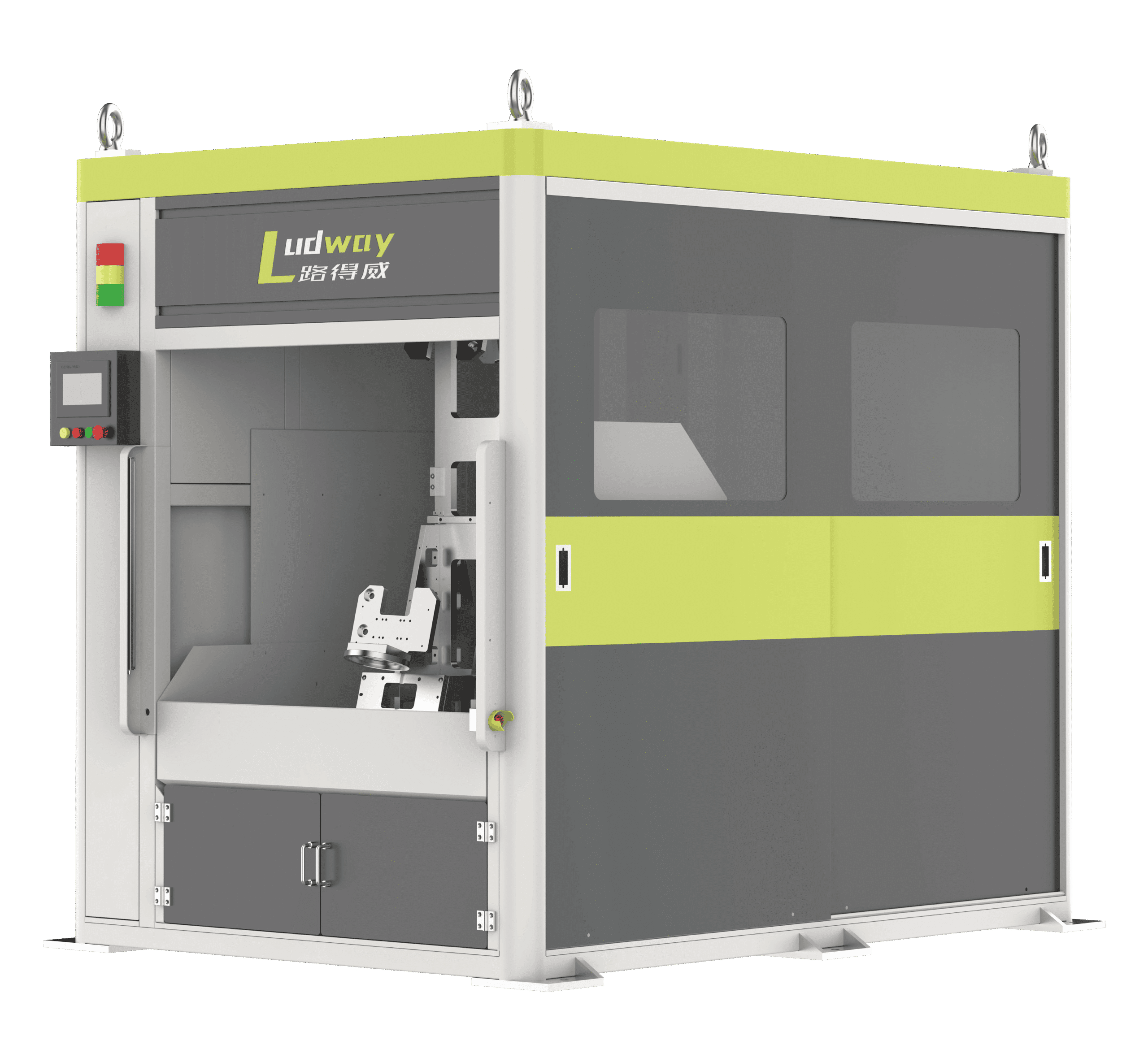
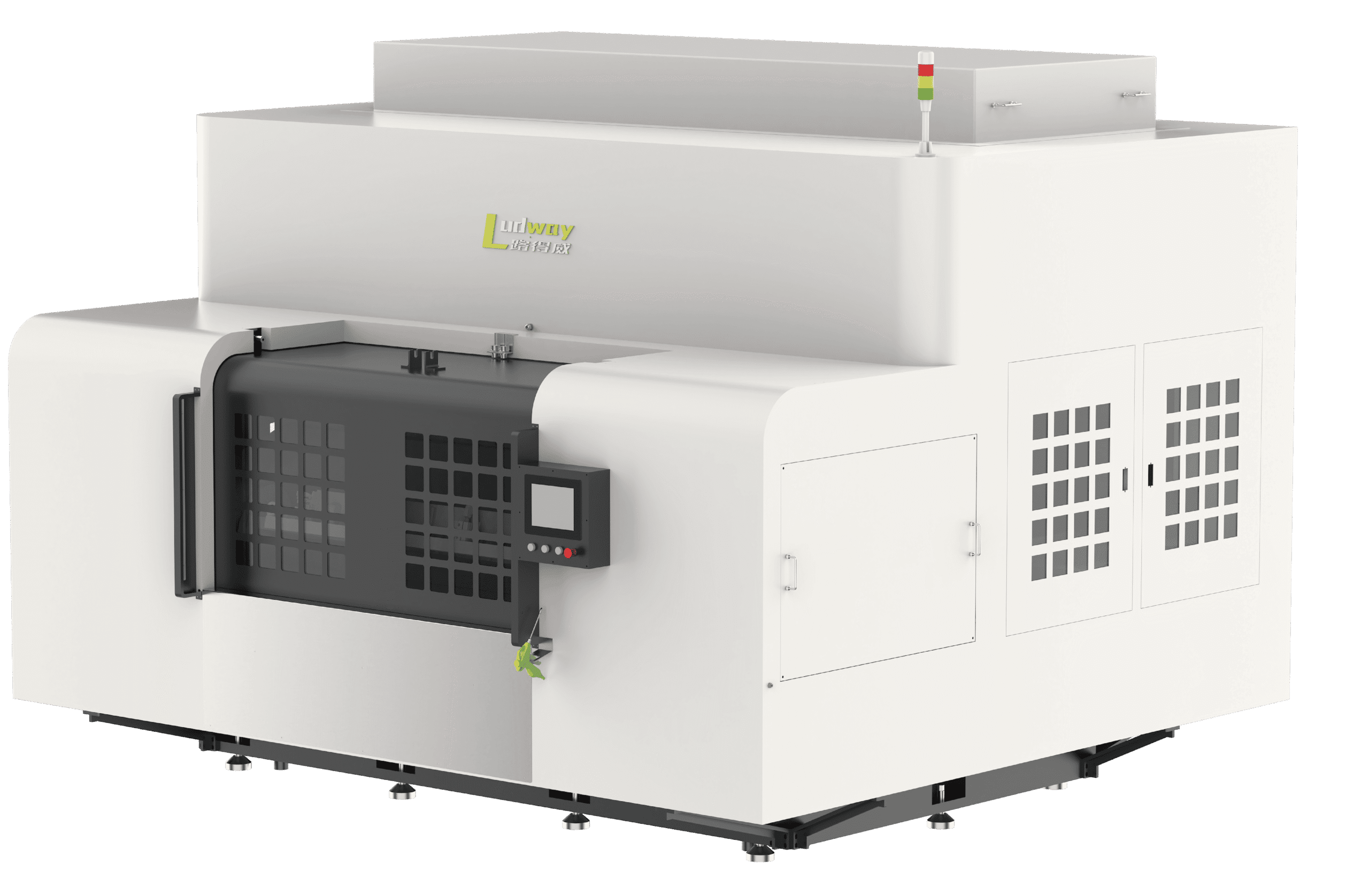
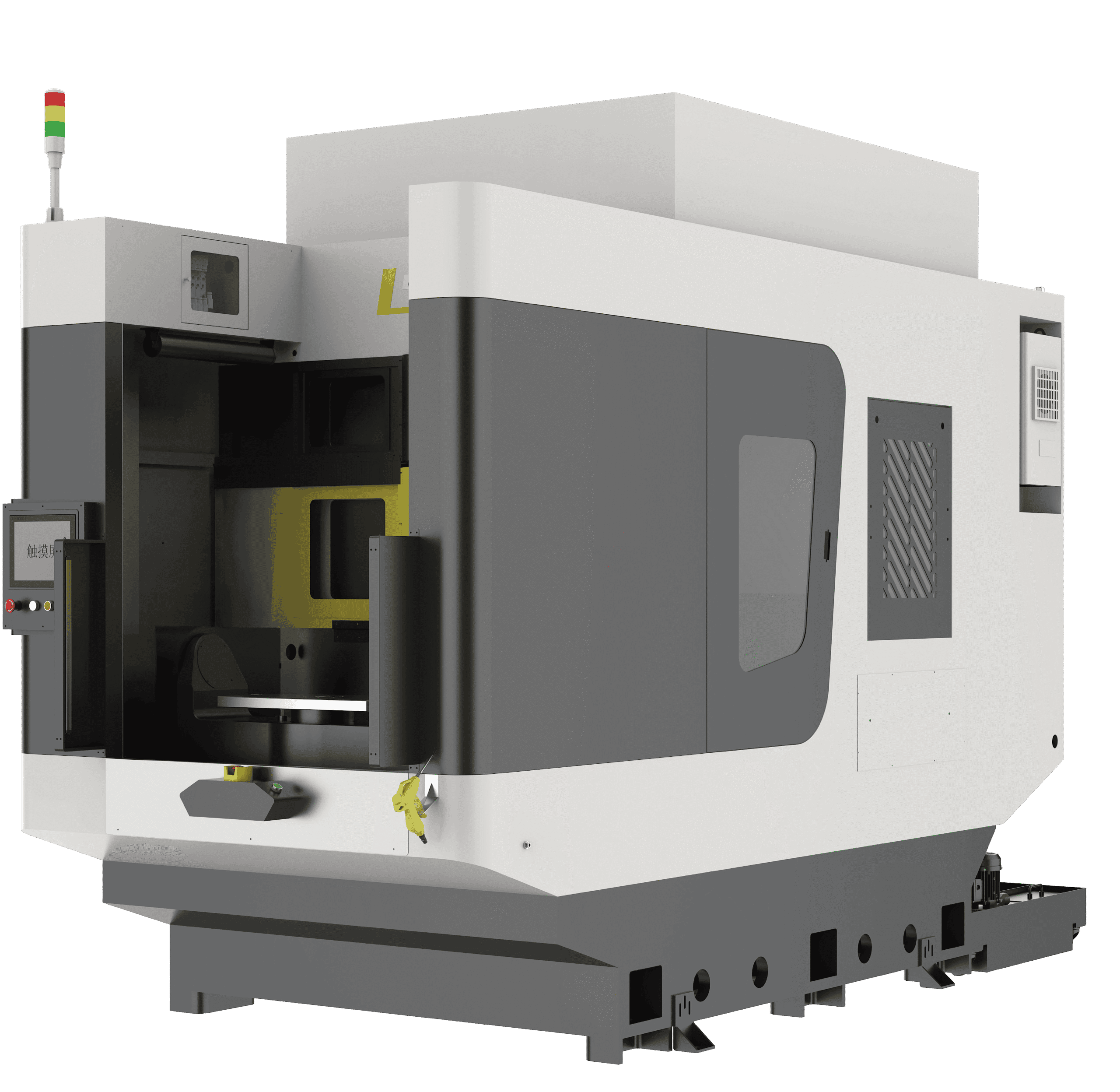
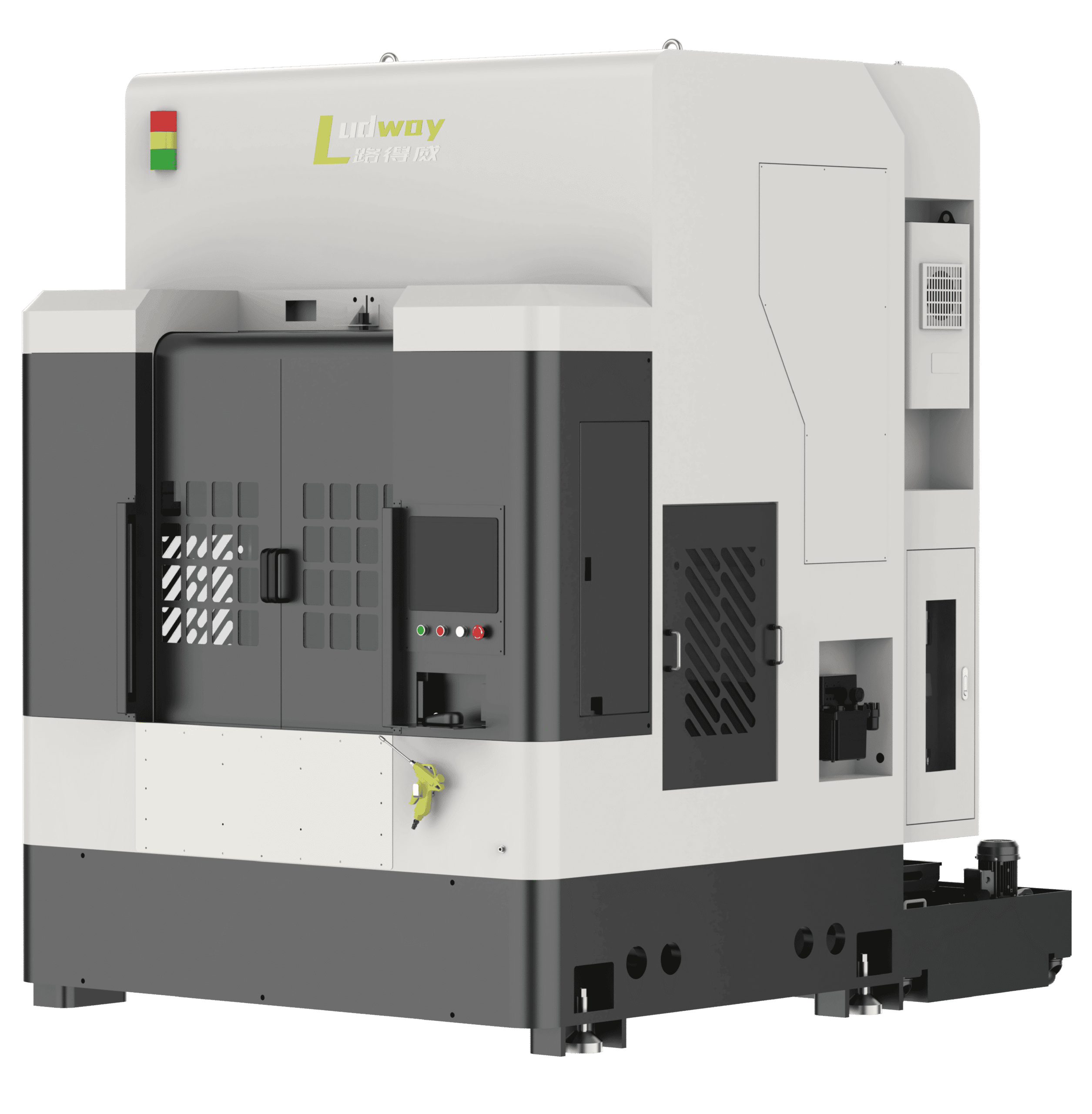
Giải pháp hoàn thiện tự động cho các bộ phận ô tô và xe điện
Giảm thời gian chu kỳ, loại bỏ các điểm nghẽn do thao tác thủ công và đáp ứng các yêu cầu về dung sai nghiêm ngặt của nhà sản xuất thiết bị gốc (OEM) đối với các bộ phận ô tô được đúc áp lực, hàn và gia công.
Những chi phí ẩn trong ngành sản xuất ô tô và xe điện


Tiêu chuẩn chất lượng OEM nghiêm ngặt
Việc gia công hoàn thiện thủ công dẫn đến bề mặt không đồng đều, làm sai lệch các dung sai kích thước quan trọng và gây ra tỷ lệ phế phẩm cao đối với các bộ phận truyền động đắt tiền.
Các khuyết tật trong mối hàn pin xe điện
Các mối hàn MIG và laser không đều hoặc không được hàn đều trên khay pin xe điện sẽ trực tiếp ảnh hưởng đến tính toàn vẹn cấu trúc và các yêu cầu về độ kín quan trọng.
Áp lực về thời gian chu kỳ trong sản xuất khối lượng lớn
Việc mài và loại bỏ gờ thủ công với tốc độ chậm gây ra tình trạng tắc nghẽn nghiêm trọng, khiến nhà máy của bạn không thể đáp ứng được các chỉ tiêu sản xuất khắt khe của cấp 1 (UPH)
Giải pháp theo loại phôi
Các giải pháp robot được thiết kế riêng cho từng bộ phận ô tô


Các chi tiết đúc áp lực & Hệ truyền động
Cắt gọt và loại bỏ phần thừa chính xác cho khối động cơ, vỏ hộp số và khớp lái. Chúng tôi gia công thành công các lỗ xuyên phức tạp và các đường phân chia dày mà không gây ra hiện tượng cắt thừa.


Các cụm hàn cho xe điện
Kết nối mối hàn bằng robot hoàn hảo cho Vỏ pin xe điện và khung động cơ. Chúng tôi mài phẳng các đường hàn MIG và laser dài để đảm bảo việc lắp ráp hoàn hảo và độ kín tuyệt đối.


Phụ kiện ngoại thất & khung gầm
Đánh bóng sáng bóng và bo tròn cạnh cho bánh xe hợp kim nhôm và thanh nóc. Đạt được bề mặt bóng như gương loại A và loại bỏ an toàn các cạnh sắc nhọn do cắt.
Công nghệ được phát triển theo tiêu chuẩn ngành ô tô
Thiết kế chống cháy nổ
Được thiết kế với hệ thống thu gom bụi ướt tiên tiến để xử lý an toàn bụi từ hợp kim nhôm và magiê dễ cháy.
Tích hợp dây chuyền liền mạch
Tương thích với các hệ thống PLC chính và các hệ thống cổng tải/xả tự động, giúp hiện thực hóa quy trình sản xuất hoàn toàn tự động.
Các mô hình chìa khóa trao tay
Các cảm biến chủ động tự động điều chỉnh theo các biến thể trong quá trình đúc, đảm bảo quá trình loại bỏ vật liệu diễn ra đồng đều trên từng chi tiết.


Các nghiên cứu điển hình về ô tô và xe điện


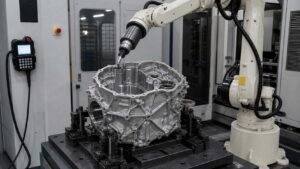
Giải pháp mài và tẩy gờ bằng robot cho vỏ hộp số CVT bằng hợp kim nhôm
Aluminum alloy CVT transmission main housings are large structural die casting components used in continuously variable transmission systems. Compared with a CVT transmission side cover, the main housing has a more complex three-dimensional structure, including large cavity areas, bearing holes, shaft holes, oil passage regions, sealing flanges, mounting bosses, reinforced ribs, thick wall sections and
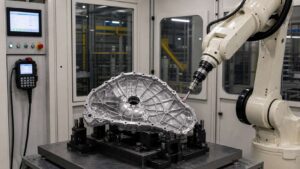

Giải pháp mài nhám bằng robot cho nắp bên hộp số CVT bằng hợp kim nhôm
Aluminum alloy CVT transmission side covers are thin-wall die casting components used in continuously variable transmission systems. Across CVT models, the part shows a wide cover body, sealing flange, mounting holes, reinforced ribs, local oil passage areas, boss features and irregular outer contours. After die casting, trimming and machining, burrs, flash, sharp edges and local
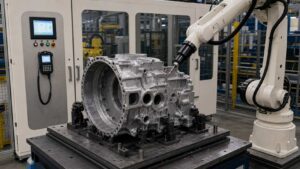

Giải pháp mài và loại bỏ gờ bằng robot cho vỏ hộp số động cơ bằng hợp kim nhôm cỡ lớn
Large aluminum alloy engine gear housings are structural casting components used in automotive engine timing and gear transmission systems. As a class, these castings feature a large cavity opening, gear chamber areas, shaft holes, mounting holes, sealing flanges, reinforced ribs, thick wall sections and irregular outer contours, making post-casting deburring and local grinding more complex
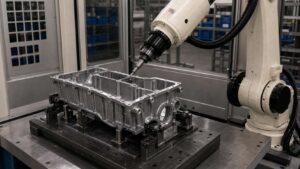

Giải pháp mài nhám bằng robot cho cụm khay dầu động cơ bằng hợp kim nhôm
Aluminum alloy engine oil pan assemblies are thin-wall lower engine components used to store engine oil, seal the bottom of the engine and support oil return or oil management structures. In common designs, the part centers on a pan-shaped cavity, perimeter sealing flange, bolt holes, drain plug boss, internal ribs, local pockets, oil return areas
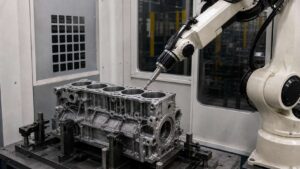

Giải pháp mài và loại bỏ ba via bằng robot cho khối xi-lanh động cơ hợp kim nhôm
Aluminum alloy engine cylinder blocks are major structural castings used in automotive engine and powertrain systems. In its common configuration, the part carries cylinder bore openings, crankcase cavities, water jacket openings, oil passage holes, mounting holes, reinforced ribs, side walls and irregular outer contours, making post-casting deburring and local grinding more complex than on simple
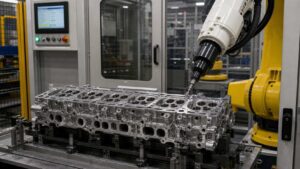

Giải pháp mài và loại bỏ ba via bằng robot cho nắp xi-lanh động cơ bằng hợp kim nhôm
Aluminum alloy engine cylinder heads are complex automotive engine castings used to form combustion chamber areas, support valve-train components and connect intake, exhaust, cooling and lubrication passages. Across common cylinder head designs, the workpiece brings combustion chamber edges, intake and exhaust ports, water jacket openings, oil passages, spark plug or injector holes, bolt holes, machined
Chứng minh hiệu quả đầu tư (ROI) cho các phụ tùng ô tô của bạn
Hãy gửi cho chúng tôi những chi tiết đúc áp lực hoặc hàn phức tạp nhất của quý khách để được thực hiện thử nghiệm chứng minh khả thi miễn phí. Quý khách sẽ nhận được:
- Video đã quay của xử lý tự động.
- Thời gian chu kỳ chính xác (CT) tính toán.
- Phân tích ROI rõ ràng để đầu tư của bạn.
Brake & Chassis Components
- Brake disc robotic grinding solution—Cast discs arrive with parting-line flash on the outer rim and uneven friction-ring surfaces. The case covers rim and balancing-rib grinding that protects the finished braking surface.
- Brake caliper robotic grinding solution—Caliper bodies combine heavy die-cast flash with machined threads and sealing faces that must stay burr-free. The walkthrough details force-controlled grinding around the piston bore and bridge.
- Brake backing plate robotic grinding solution—Stamped backing plates carry sharp punched edges and weld spatter that interfere with friction-material bonding. Includes edge radiusing matched to stamping-line cycle times.
- Caliper bracket robotic grinding solution—High-volume bracket castings trap burrs around bolt holes and pin slides that stall assembly lines. The case shows fixture design for running mixed bracket families in one cell.
- Steering knuckle robotic grinding solution—Forged knuckles pair complex 3D geometry with tolerance-critical bearing bores. Multi-axis path planning deburrs machined faces and radiuses edges without touching finished bores.
EV & Drivetrain
- EV battery tray robotic grinding solutions—Welded aluminum trays need long MIG and laser seams flushed flat without thinning the weld, plus edge deburring ahead of leak testing. The reference build for structural pack lines.
- Crankshaft robotic grinding solution—Crankshafts require burr-free oil holes, journal fillets and counterweight profiles with zero nicks. Covers workpiece rotation handling and post-process inspection gating.
Aluminum Powertrain Castings
- Aluminum transmission bell housing deburring and grinding—Large bell housings concentrate burrs in deep internal pockets and around the clutch bore where tools barely reach.
- Aluminum cylinder head cover deburring—Thin-wall cam covers distort under aggressive contact; low-force deflashing keeps gasket sealing surfaces flat.
- Aluminum bearing ladder frame deburring and grinding—Ladder frames pair a wide parting line with closely spaced bearing saddles that cannot be over-cut.
- Aluminum engine bedplate side wall deburring—Bedplate walls combine long straight edges with stiffening ribs; the case covers rib-root deburring tool selection.
- Aluminum cylinder block skirt frame deburring and grinding—Skirt frames have thin projecting walls where chamfer consistency drives piston assembly fit.
- Die-cast motor housing deflashing and deburring—Traction motor housings blend flash removal with fin-edge cleanup that directly affects thermal performance.
- Alloy wheel robotic polishing solutions—Wheels need spoke-face polishing and barrel blending to a Class-A cosmetic standard before clear coating.
Process Guide
- Die casting deburring automation: process chain guide—Maps where robotic finishing sits between the trim press and machining, with equipment selection logic for mixed casting families.