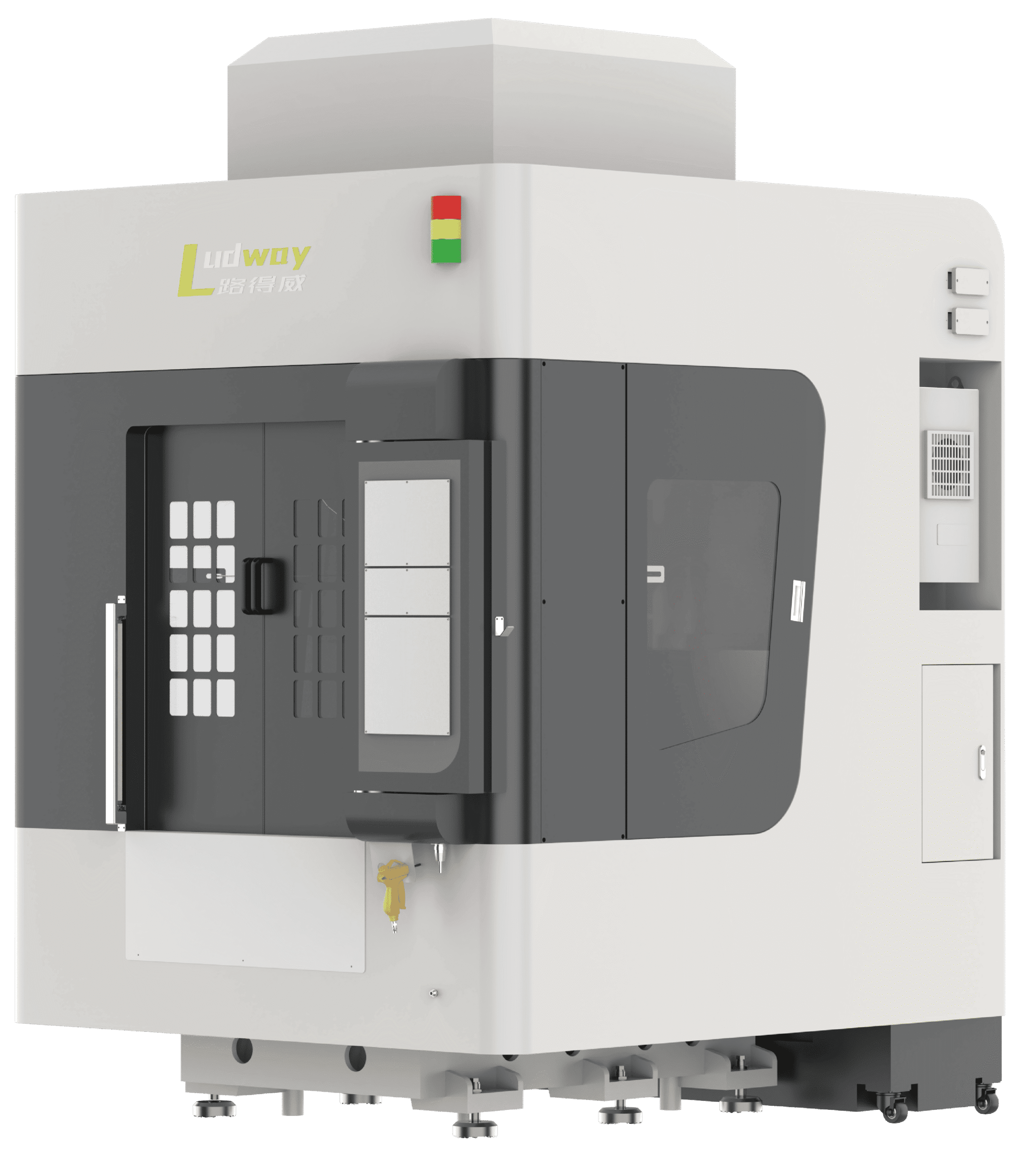
Automated Finishing Solutions for Automotive & EV Parts
Accelerate cycle times, eliminate manual bottlenecks, and achieve strict OEM tolerances for die-cast, welded, and machined auto components.
The Hidden Costs in Automotive & EV Manufacturing


Strict OEM Quality Standards
Manual finishing leads to inconsistent surfaces, destroying critical dimensional tolerances and causing high scrap rates for expensive powertrain parts.
EV Battery Weld Imperfections
Uneven or poorly blended MIG and laser welds on EV battery trays directly compromise structural integrity and critical sealing requirements.
High-Volume Cycle Time Pressure
Slow manual deburring and grinding create massive bottlenecks, preventing your facility from meeting demanding Tier-1 production quotas (UPH)
Solutions by Workpiece
Tailored Robotic Solutions for Every Automotive Component


Die-Castings & Powertrain
Precision deburring and flash removal for engine blocks, transmission housings, and steering knuckles. We conquer complex cross-holes and heavy parting lines with zero over-cutting.


EV Welded Assemblies
Flawless robotic weld blending for EV battery housings and motor frames. We flush-grind long MIG and laser seams to ensure perfect assembly and absolute sealing.


Exterior & Chassis Trim
High-gloss polishing and edge radiusing for aluminum alloy wheels and roof rails. Achieve Class-A mirror finishes and safely eliminate sharp sheared edges.
Technology Built for Automotive Standards
Explosion-Proof Design
Engineered with advanced wet dust collection systems to safely process combustible aluminum and magnesium alloy dust.
Seamless Line Integration
Compatible with major PLCs and automated loading/unloading gantries for true lights-out manufacturing.
Turnkey Cells
Active sensors dynamically adapt to casting variations, guaranteeing 100% consistent material removal on every single part.


Automotive & EV Case Studies


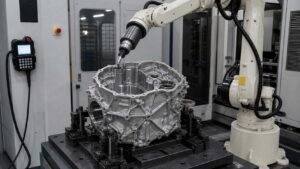
Aluminum Alloy CVT Transmission Main Housing Robotic Deburring and Grinding Solution
Aluminum alloy CVT transmission main housings are large structural die casting components used in continuously variable transmission systems. Compared with a CVT transmission side cover, the main housing has a more complex three-dimensional structure, including large cavity areas, bearing holes, shaft holes, oil passage regions, sealing flanges, mounting bosses, reinforced ribs, thick wall sections and
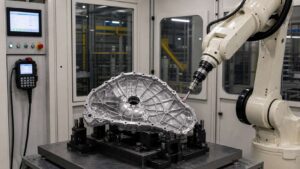

Aluminum Alloy CVT Transmission Side Cover Robotic Deburring Solution
Aluminum alloy CVT transmission side covers are thin-wall die casting components used in continuously variable transmission systems. Across CVT models, the part shows a wide cover body, sealing flange, mounting holes, reinforced ribs, local oil passage areas, boss features and irregular outer contours. After die casting, trimming and machining, burrs, flash, sharp edges and local
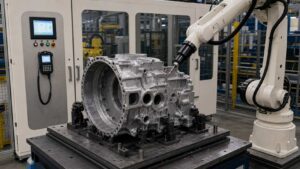

Large Aluminum Alloy Engine Gear Housing Robotic Deburring and Grinding Solution
Large aluminum alloy engine gear housings are structural casting components used in automotive engine timing and gear transmission systems. As a class, these castings feature a large cavity opening, gear chamber areas, shaft holes, mounting holes, sealing flanges, reinforced ribs, thick wall sections and irregular outer contours, making post-casting deburring and local grinding more complex
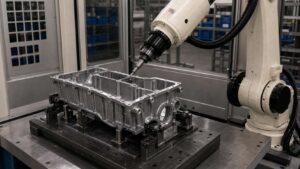

Aluminum Alloy Engine Oil Pan Assembly Robotic Deburring Solution
Aluminum alloy engine oil pan assemblies are thin-wall lower engine components used to store engine oil, seal the bottom of the engine and support oil return or oil management structures. In common designs, the part centers on a pan-shaped cavity, perimeter sealing flange, bolt holes, drain plug boss, internal ribs, local pockets, oil return areas
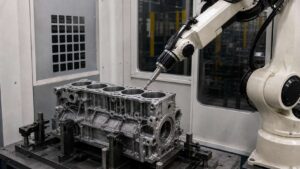

Aluminum Alloy Engine Cylinder Block Robotic Deburring and Grinding Solution
Aluminum alloy engine cylinder blocks are major structural castings used in automotive engine and powertrain systems. In its common configuration, the part carries cylinder bore openings, crankcase cavities, water jacket openings, oil passage holes, mounting holes, reinforced ribs, side walls and irregular outer contours, making post-casting deburring and local grinding more complex than on simple
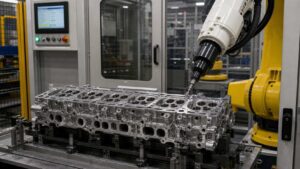

Aluminum Alloy Engine Cylinder Head Robotic Deburring and Grinding Solution
Aluminum alloy engine cylinder heads are complex automotive engine castings used to form combustion chamber areas, support valve-train components and connect intake, exhaust, cooling and lubrication passages. Across common cylinder head designs, the workpiece brings combustion chamber edges, intake and exhaust ports, water jacket openings, oil passages, spark plug or injector holes, bolt holes, machined
Prove the ROI on Your Own Auto Parts
Ship us your toughest die-cast or welded component for a free Proof of Concept. You will receive:
- Recorded Video of robotic processing.
- Precise Cycle Time (CT) calculations.
- Clear ROI Analysis for your investment.
Brake & Chassis Components
- Brake disc robotic grinding solution—Cast discs arrive with parting-line flash on the outer rim and uneven friction-ring surfaces. The case covers rim and balancing-rib grinding that protects the finished braking surface.
- Brake caliper robotic grinding solution—Caliper bodies combine heavy die-cast flash with machined threads and sealing faces that must stay burr-free. The walkthrough details force-controlled grinding around the piston bore and bridge.
- Brake backing plate robotic grinding solution—Stamped backing plates carry sharp punched edges and weld spatter that interfere with friction-material bonding. Includes edge radiusing matched to stamping-line cycle times.
- Caliper bracket robotic grinding solution—High-volume bracket castings trap burrs around bolt holes and pin slides that stall assembly lines. The case shows fixture design for running mixed bracket families in one cell.
- Steering knuckle robotic grinding solution—Forged knuckles pair complex 3D geometry with tolerance-critical bearing bores. Multi-axis path planning deburrs machined faces and radiuses edges without touching finished bores.
EV & Drivetrain
- EV battery tray robotic grinding solutions—Welded aluminum trays need long MIG and laser seams flushed flat without thinning the weld, plus edge deburring ahead of leak testing. The reference build for structural pack lines.
- Crankshaft robotic grinding solution—Crankshafts require burr-free oil holes, journal fillets and counterweight profiles with zero nicks. Covers workpiece rotation handling and post-process inspection gating.
Aluminum Powertrain Castings
- Aluminum transmission bell housing deburring and grinding—Large bell housings concentrate burrs in deep internal pockets and around the clutch bore where tools barely reach.
- Aluminum cylinder head cover deburring—Thin-wall cam covers distort under aggressive contact; low-force deflashing keeps gasket sealing surfaces flat.
- Aluminum bearing ladder frame deburring and grinding—Ladder frames pair a wide parting line with closely spaced bearing saddles that cannot be over-cut.
- Aluminum engine bedplate side wall deburring—Bedplate walls combine long straight edges with stiffening ribs; the case covers rib-root deburring tool selection.
- Aluminum cylinder block skirt frame deburring and grinding—Skirt frames have thin projecting walls where chamfer consistency drives piston assembly fit.
- Die-cast motor housing deflashing and deburring—Traction motor housings blend flash removal with fin-edge cleanup that directly affects thermal performance.
- Alloy wheel robotic polishing solutions—Wheels need spoke-face polishing and barrel blending to a Class-A cosmetic standard before clear coating.
Process Guide
- Die casting deburring automation: process chain guide—Maps where robotic finishing sits between the trim press and machining, with equipment selection logic for mixed casting families.